


The world had ended but you did not know. You wake up from a coma, throat parched dry, talking out loud in an empty room. You are speaking to your friend who you think is sitting next to you, in the chair next to your hospital bed, only to realize that the room is empty, and the flowers your wife had brought for you have withered. You call out for a nurse, but get no response.
Trudging along with an IV drip and pole, you leave the room.
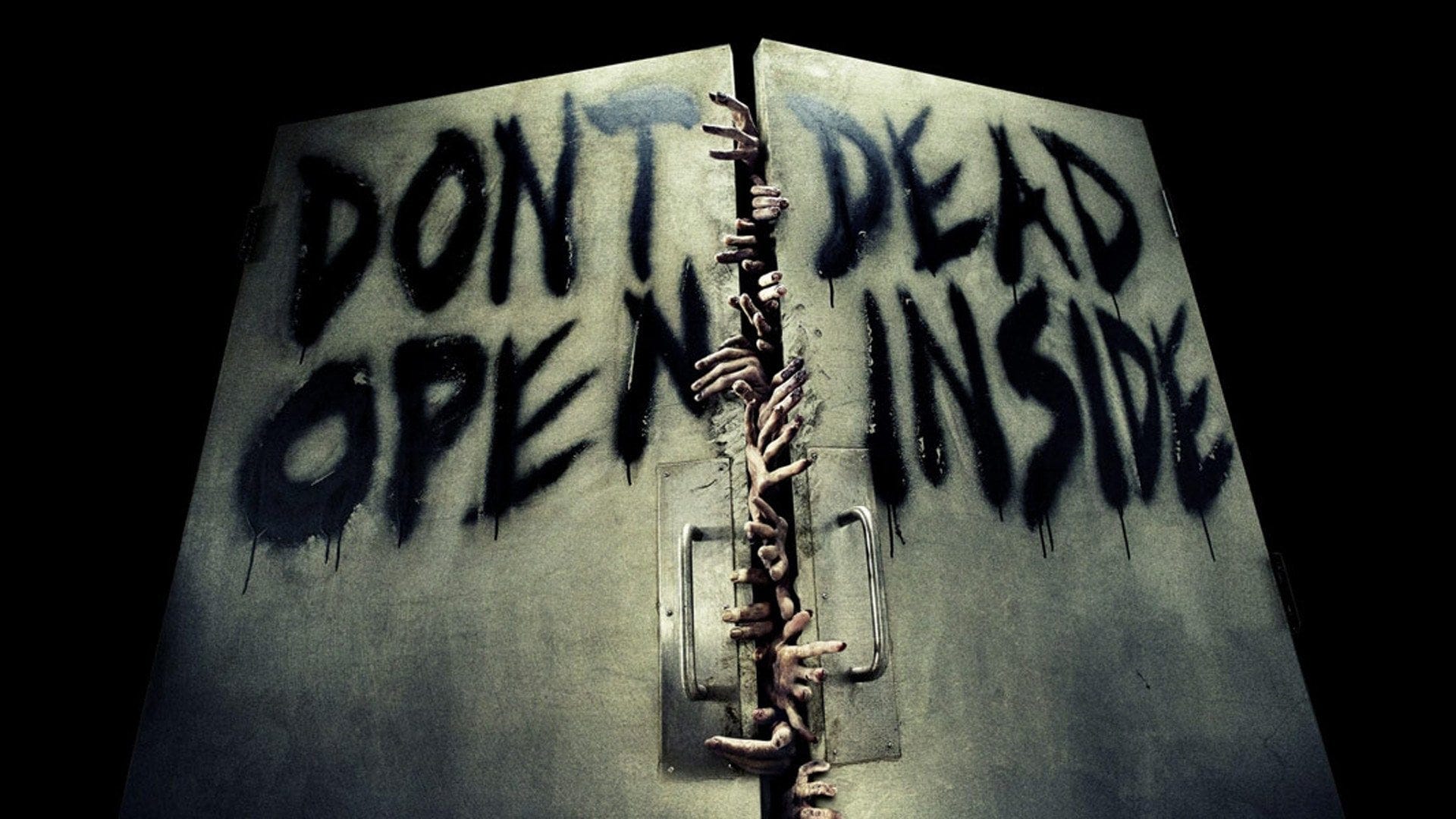
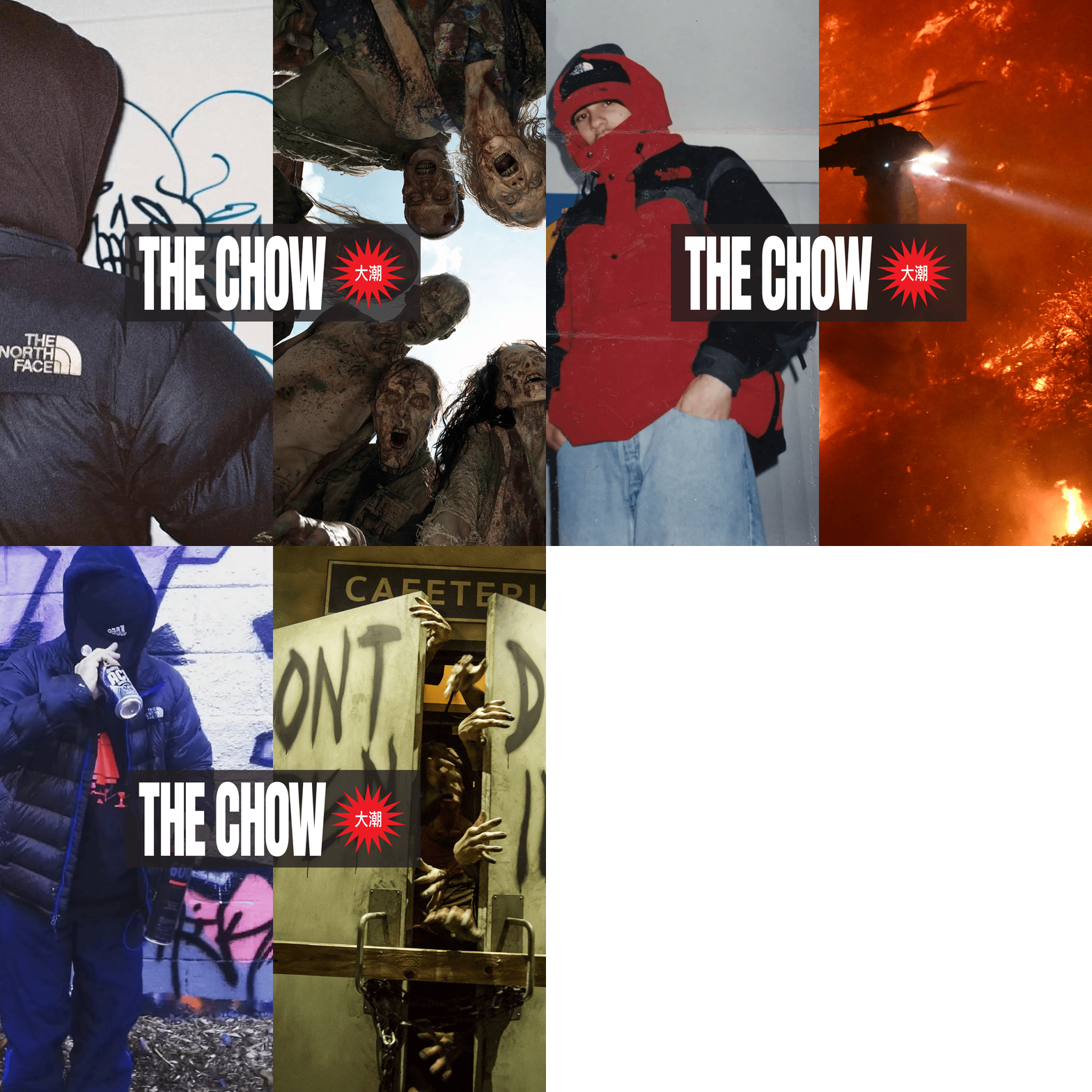
Lying on the floor across from you, at the other end of the hallways, is what looks like a human body, stripped almost entirely of all its flesh: a woman’s head with ribs and a spine. You turn, and dark, dried blood is streaked on the walls, marking a path towards a pair of metal doors, with handles wrapped in chains, locked; streaked in black ink are the words, “DON’T OPEN, DEAD INSIDE.”
So goes an early scene in the pilot episode of The Walking Dead, one of many apocalyptic media where walls tagged with graffiti are a recurring motif. Graffiti appears in the zombie film, 28 Days Later (2002), where the words “REPENT. THE END IS EXTREMELY FUCKING NIGH.” are etched beside the stairway of a church. In Mad Max: Fury Road, “WHO KILLED THE WORLD?” is an often repeated question, one scribbled, graffiti-style, in the makeshift desert palace of the film’s antagonist, Immortan Joe. Or, in the walls of the infertile, doomed-for-population-collapse society in Children of Men: “LAST ONE TO DIE, PLEASE TURN OUT THE LIGHTS.”
In all cases, the world ends. And whether with a bang or a whimper, we are always left with graffiti as a final cry, the last form of human expression.
This is hardly by accident. Go to any set of graffiti-tagged walls in your nearby metro and they emanate a similar feeling. I keep thinking about the writing scrawled throughout Paris early last year: spray paint tagged on centuries-old limestone, illegible sketches of words and phrases, drawn out with a talisman-like intricacy. The letters—if you can even call them that—look more like ancient scripts for spell incantations than the work of a few angry protesters, like a language from a time that is not our own, from a far-flung, post-apocalyptic future we do not belong to.
“Tagging” a wall, according to cultural criminologist Jeff Ferrell, has always been a way for graffiti artists to reclaim space from any forces deemed hostile. For some, that might be zombies, as in The Walking Dead and 28 Days Later, but for others that could be the French government, or (more often) a private equity firm gentrifying the local neighborhood. The medium finds itself most at home with those needing resistance or release. Perhaps this is why it always appears in stories where the end of the world takes place. When our very existence is threatened, how else will we let the world know that we were here?
Graffiti artists in Arc’teryx and The North Face.
This is not the kind of story that surfaces in the endless sea of trend discourse, but graffiti artists were some of the early proponents of brands like Arc’teryx and The North Face.
“Graffiti is a largely outdoor hobby, so you want good clothing to help with the elements,” one graffiti artist tells the writer Chris Danforth in a series of interviews on Arc’teryx’s role in the graffiti subculture. “[T]hey have chest pockets. It’s a good place to put your cans of spray paint.”
A similar story is told for The North Face, which became a staple in New York graffiti culture of the ‘90s and early ‘00s. As one feature series by Living Proof New York puts it, the mountaineering brand struck a perfect balance between function, status, and street symbolism. “[For] a graffiti writer in the ‘90s, this was the uniform back then,” the artist Mike Irak recalls in one segment of the feature, while fiddling around with a pair of North Face Mountain Pants from 1995. “This was an armor.”
“You come out [near Houston Street] at any time past 5, you’re going to bump into somebody chilling… that’s where the night began and all the fuckery started,” another New York-based graffiti writer, POST VSOP, tells Living Proof. “And everybody was in North Face jackets.”
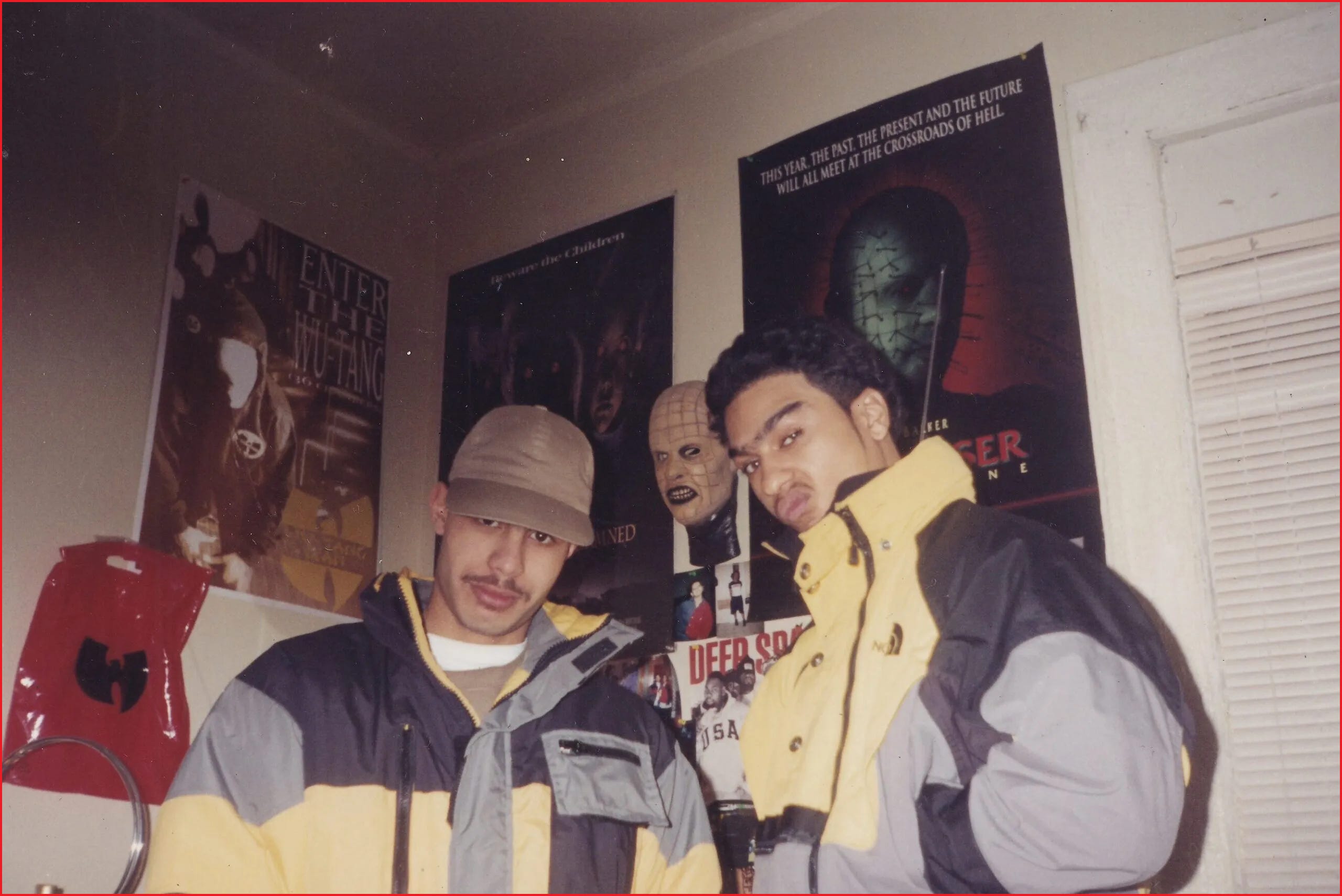
This was “gorpcore” at one of its earliest forms: Long before outdoor brands like The North Face, Arc’teryx, and Salomons were repurposed into elevated streetwear, graffiti writers of the ‘90s dressed themselves in jackets like the Search and Rescue Light or in navy-colored zip-ups with Arc’teryx’s famed skeleton bird.
You could also say that, for these young men, the New York of the ‘90s was quasi-apocalyptic. Under Rudy Giuliani’s tenure as mayor, surveillance and policing—especially on graffiti—were on sharp ascent. In a sense, mountaineering gear became a kind of survival armor: not the suede jacket and holstered revolver of the zombie-killing Rick Grimes, but young men dressed in jackets to wade through the cold.
“I feel like this part of New York City history is a part of world history,” Mike Irak tells Living Proof. “This type of style, this type of movement spread around all over the world.”
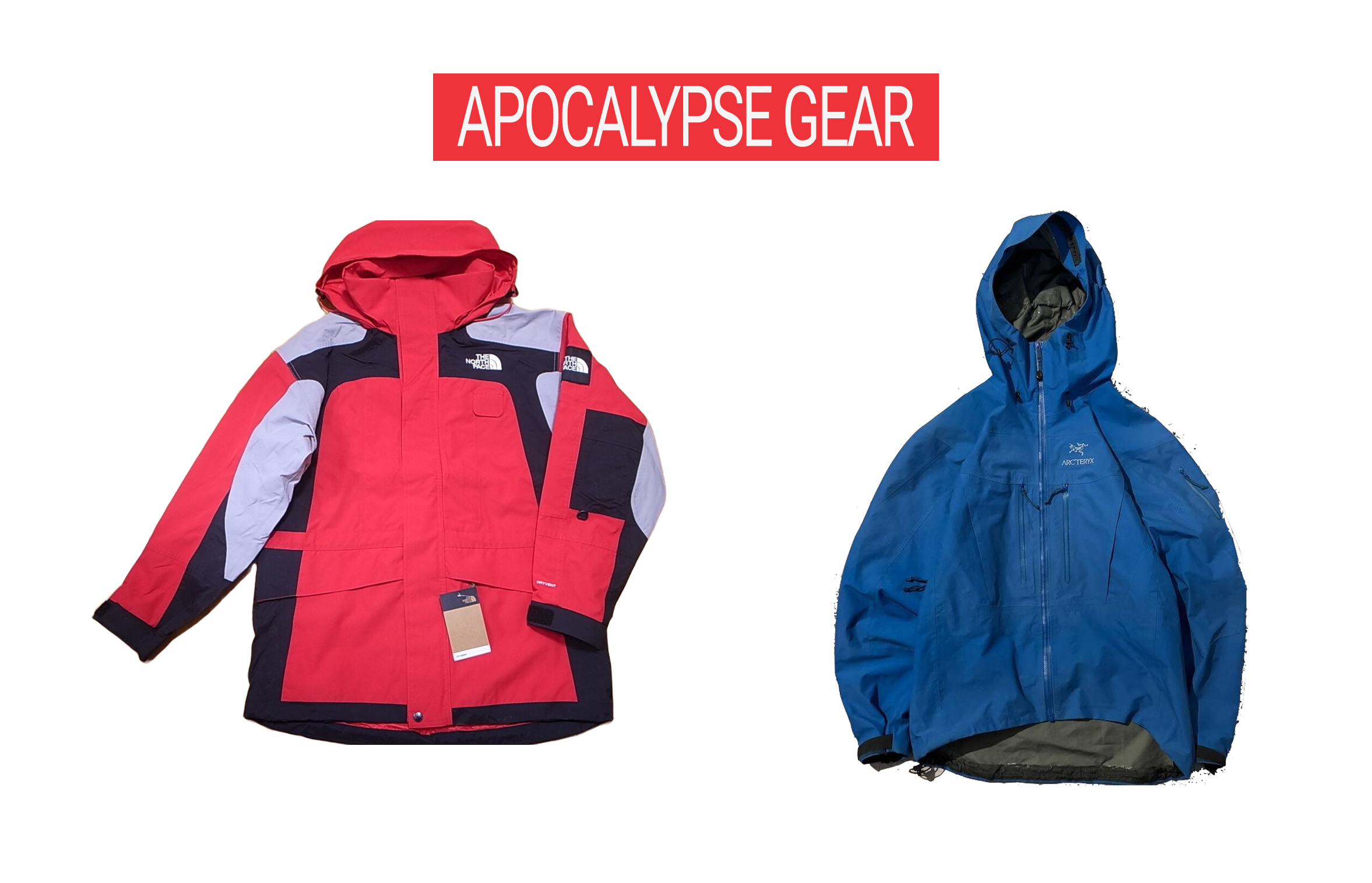
Observe your nearby city long enough and you’ll find that gorpcore has already become one of the defining “looks” of the 2020s. Stripped of its outdoor (or even subcultural) functions, brands like Arc’teryx, The North Face, and Salomon have already become wardrobe staples. Manhattan financiers will commute to air-conditioned offices in Arc’teryx windbreakers. In Hong Kong, Salomon trail runners can be spotted as easily in hikes to The Peak as in industrial warehouse raves. And the North Face’s 1996 Retro Nuptse—an inflated puffer coming in a seemingly infinite range of colors—has kept its staying power as a normie winter jacket essential for half a decade. As the strategist Victoria Buchanan wrote in late 2025, “consumers now want performance fabrics and functional aesthetics, from summit to subway.”
Today, Maison Margiela engages in collaborative drops with Salomon. And in spring of 2025, cult-status Japanese designer Junya Watanabe released a collection inspired by The North Face’s Stow Away rain jacket. Even in a space as cutthroat and crowded as fashion and lifestyle, “gorpcore” brands have been raking in an enviable profit: “Amer Sports, parent company of Arc’teryx and Salomon, reported $2.71 billion in its first-half 2025 revenue—up 23.5% year-over-year, driven by lifestyle adoption,” Victoria reports. “Salomon alone crossed the $1 billion footwear mark in 2024, a once-unthinkable milestone for a brand rooted in alpine sports.”
Last year, a friend of mine once joked at an industry networking event that “gorpcore is a psyop.” Search online and there’s little evidence backing that claim—some conspiracies begin with the fact that contracts for US Special Operations—but the theory did point to the large amount of cynicism placed on these outdoor brands’ mainstream-ification, especially on the internet. One meme in particular mocks Arc’teryx for its use by trendy urbanites. “WHAT IT’S MEANT TO SEE”: mountains of snow. “WHAT IT ACTUALLY SEES”: mountains of Ketamine.
But at its core, “gorpcore” is about adapting to adverse environments—surviving the cold in a jacket with high-fill-power goose feathers or synthetic warming technology, regardless of whether or not it has a trendy print of a bird’s skeleton. As Christian Dior once famously quipped, “without foundations, there can be no fashion.” He was talking about the importance of shape, how clothes fit on the body, but I also speculate the French designer was hinting that clothes need to fit the environment around you.
The graffiti artists dressed in Arc’teryx and The North Face knew this. In the sheer cold, inking walls to mark space as their own against quasi-apocalyptic threats, while writing, tagging, letting the world know they were here, clothing was treated like a wearable technology, where street cred naturally followed behind functionality.
Where do these ideas find themselves in a world where catastrophe looms?
Fourteen inches of rain, dumped all over Spain, in the span of twenty four hours. Jamaica lost one-third of its GDP to a single storm in November. We are, according to scientists at Yale, entering a period of “overshoot,” where rising temperatures near the tipping point for when the Greenland Ice Sheet melts into water, where heatwaves cause fires in Argentina and Chile and LA. The climate is increasingly K-shaped, in the sense that it is becoming more extreme: the Northern Hemisphere freezes in “polar vortex” cold snaps, while heatwaves cascade across the equator. These problems are entirely man-made, but the question of how we’ll survive an increasingly hostile environment still requires answering.
“I’ve always thought about this question of ‘temperature control.’ We’re very used to thinking that we’re going to temperature control a space or building,” Stephanie Sherman, a curator of the London-based environmental fashion collective, Earthsuits, said in a lecture last year. “But why don’t we just temperature control ourselves?”
Perhaps it’s no surprise that “gorpcore” is an increasingly popular style in an adverse climate. In a world mired by climate anxiety, it drives style from function, becoming more a protocol, a technology that, as the Earthsuits collective writes in their philosophy, “can provide direct access to previously exclusionary infrastructure.”
That includes everything from body-cooling textiles and raincoats to concert-friendly earplugs, but also “gorpcore.” An Arc’teryx wind breaker finds itself at home at an air-conditioned office in Manhattan, but it also keeps the body warm in a city colder than Antarctica. Your Salomon trail runners work at both a mountain hike or industrial warehouse rave, and while the scenes are different, both help the human wade through adverse environments, man-made or not. As the graffiti artists of the ‘90s understood, “gorpcore” is how we might survive in a world teetering towards apocalypse—and how we can do that in style.
