


Buck Clayton was not the first African American jazz musician to arrive in Shanghai. With the Harlem Gentlemen, a 12-piece jazz band where Clayton was leader and trumpeter, he docked in the city’s French Concession in 1934. Fresh off the boat, this troupe of traveling musicians were, like many other Black jazz musicians before them, here to discover what life in the “Far East” had to offer.
Around the world, demand for “authentic” African American jazz was soaring to new heights. And Shanghai was no exception: Clayton’s travels to the city, as Andrew Field and James Farrer note in Shanghai Nightscapes, were “part of a much larger diaspora of Black American artists and entertainers following World War I.” Between the 1920s and the 1930s, many such musicians quickly discovered lives more illustrious—and artistic careers more successful—in cities far from home, places where they could be free from “the degradations and humiliations that they often experienced in American society.”
Clayton and the Harlem Gentlemen’s entry into Shanghai was especially anticipated, in particular by the city’s elite circles. The troupe had set foot in China on invitation from Teddy Weatherford, a Black jazz pianist who’d already gained notoriety in Shanghai’s cosmopolitan cabaret and dance hall scene, and were set to perform at the famed Canidrome Ballroom on the night of their arrival. Rumors abounded throughout Shanghai—that allegedly, this was going to be the best jazz orchestra to ever perform in the Far East.
Jazz’s most high-profile fanatics would dress their finest—gowned, tuxed, or in dinner jackets, preened for the ball—and arrive to watch Clayton and the Harlem Gentlemen. Two of the Soong sisters were in the audience: among the patrons of the night were Song Meiling, or “Madame Chiang,” the wife of Kuomintang leader Chiang Kai-shek; and Song Ailing, a businesswoman wedded to H. H. Kung, the richest man in China during the early 20th century.
The Canidrome Ballroom’s main feature was two grand pianos, facing one another in parallel. Guiding the band’s melody was Weatherford, fingers dancing along the keys of one piano, while Eddie Beal, pianist of the Harlem Gentlemen, commanded the other. Though stakes were high, one news article presents their performance as a resounding success: “[Weatherford and Beal] combine perfectly… switch[ing] at intervals in a manner which calls for great timing,” Max Chaicheck, then a reporter for the China Press, wrote of the event.
“Buck Clayton… as a trumpet player, he has no equal here… The new all-colored band with its hi-de-ho rhythms set our feet adancing,” Chaicheck continued to write. “It played jazz as it should be played, hot tunes that called for expert handling of all instruments and the new bands-men proved more than capable… Little Harlem has been transplanted from America to the Canidrome Ballroom.” [Emphasis mine].
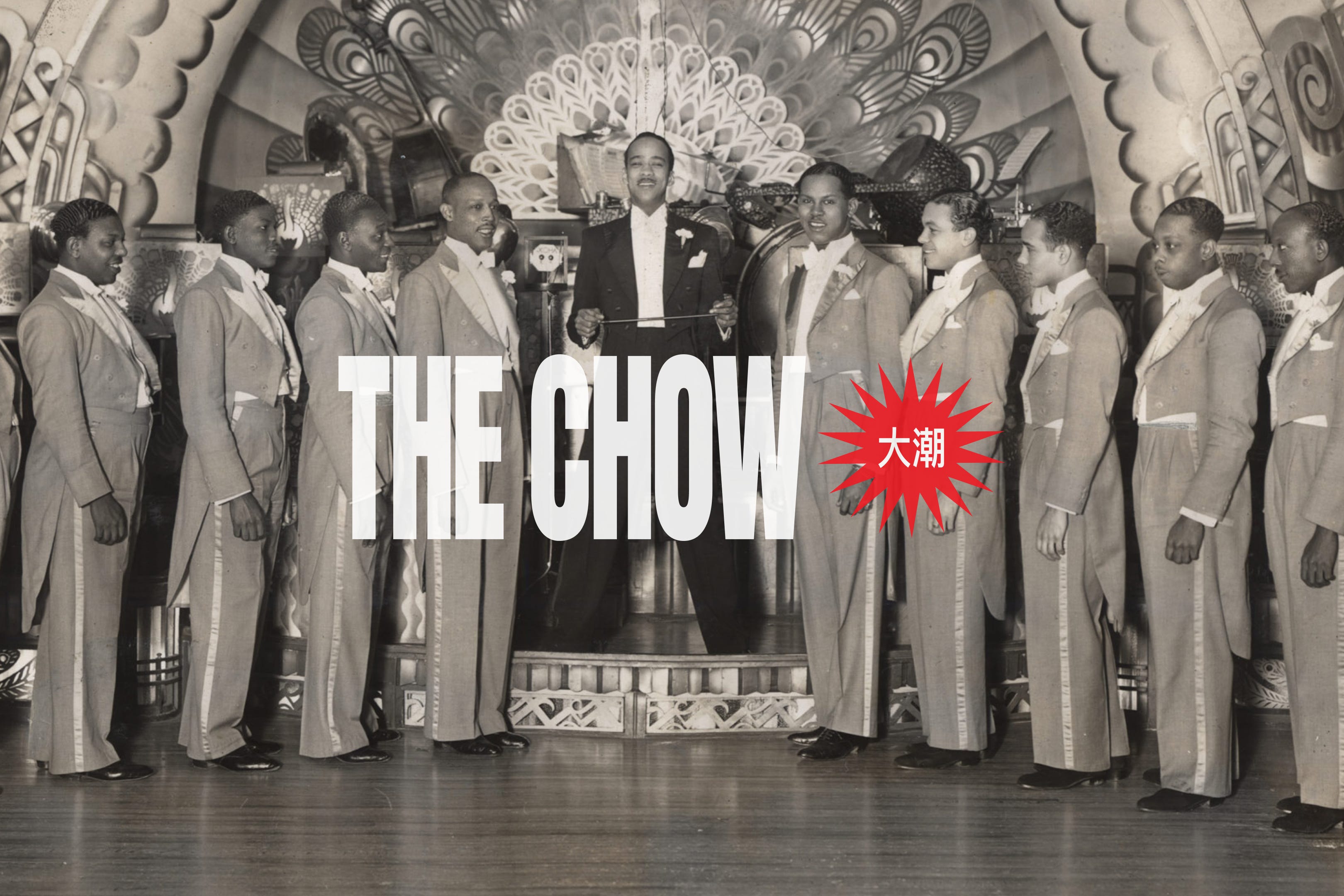
I bring up Clayton’s story as a reminder of what nightlife makes possible. The cover of darkness at a club or ballroom or a bar always had potency for worldmaking, projecting us towards realities that are not our own: for the night Clayton arrived in China, Harlem came to Shanghai.
Nightlife’s sense of transportive, disembodied worldmaking did also find itself in Clayton’s life in Shanghai, a place where he enjoyed many privileges that he couldn’t back home: a wardrobe full of fancy suits of Chinese tailoring, women of various nationalities worshipping at his feet, and adoring crowds wherever he went.
A less charitable reading of this story might see Buck as an early prototype of the “digital nomad,” a man who could not find success in the West, and sought it elsewhere instead. And yes, Black American jazz musicians (unfairly) enjoyed more privileges than their local Chinese counterparts, but I’m more inclined to think that Clayton understood China far better than a contemporary course-seller in Dubai understands the UAE. In his memoir, for example, Clayton recalls how he reconfigured American jazz for Chinese tastes: “I sketched out some of the most popular Chinese songs at the time and after a few rehearsals we were playing it like we had been doing it a long time.”
The more important lesson of Clayton’s story is how it highlights alternative and surprising ways of connecting between cultures. Clayton felt more welcome in China than in his own home in Kansas. He fled Jim Crow-era America to mingle with the Shanghai glitterati, and lived an early iteration of a “modern” “cosmopolitan” life.
Shanghai cabarets presented an early model of “globalizing” that has since faded from contemporary memory. And it differs from the top-down vision of organized diplomatic globalization, insofar as it arises informally, outside of the West, and from the margins. Like Clayton, other members of the city’s jazz scene were escaping challenges in their home countries when they first arrived in China.
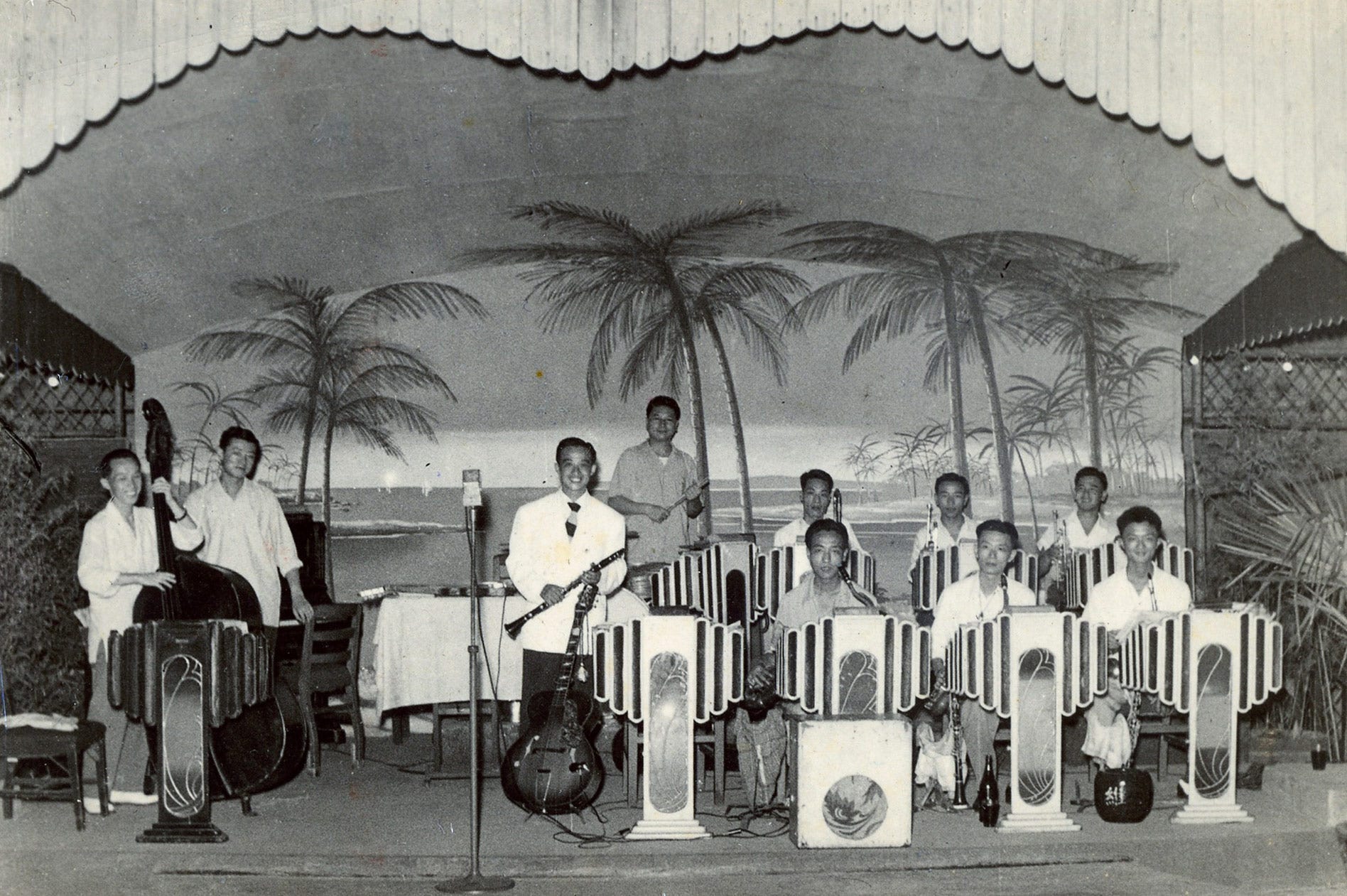
Over 100,000 Russians escaping the Bolsheviks were among them, and roughly a quarter of them arrived in Shanghai. These “white refugees” included Oleg Lundstrem, a teenage leader of a jazz orchestra, traveling to Harbin and then Shanghai via the Chinese Eastern Railway. The Lundstrem Jazz Orchestra still exists today, a century after its founding, and the organization credits Shanghai for propelling the success of the orchestra, which debuted first at the Yangtze Hotel, and later at the popular ballroom at the Majestic Hotel. “Over forty” jazz groups led by Russian refugees (allegedly) came and went in Shanghai’s early cabaret scene, but none came close to Lundstrem’s orchestra or Lundstrem himself, who the Shanghai Press dubbed “the king of jazz in the Far East.”
There were plenty of Filipinos too. Many of them wound up in Shanghai from passenger ships that sailed between major Asian ports. And like the karaoke singers in reality TV shows today, they were excellent entertainers: Bao Zhengzhen, a Shanghainese man involved in the jazz scene of the 1920s, recalls, “In the lower-class dance halls you would have Chinese bands playing, but there is no way they could compare to those Filipinos.”1
In Davos earlier this year, French President Emmanuel Macron warned that we are shifting “towards a world without rules. Where international law is trampled underfoot.” The post-war dream of a society where we are united by global collective governance is slowly decaying, as member states at a recent Security Council meeting sound the alarm for a new “crisis of confidence” in international organizations.
Consider how the COVID-19 pandemic exposed significant weaknesses in the WHO’s global health governance or how the UN is regularly denounced for bureaucratic bloat. The World Economic Forum’s mantra, “you will own nothing and be happy,” is now widely criticized as an elite globalist agenda, while the Security Council remains suspended in complete paralysis in working towards peace in Gaza. These critiques, to me, signal an important shift: a deeply held disillusionment with the world of top-down, institution-led globalization.
This is not the “end” of globalization per se, but likely a change in what globalization will look like. In 2026, globalization is increasingly bottom-up: government-sponsored work visas are increasingly challenging to obtain, yet informal migration is on the rise; America closes several embassies in the Middle East, yet digital nomads flock to Dubai in rising numbers. And, like in the Shanghai cabaret scene, cultures can and will converge at the crossroads through nightlife.
Nightlife spaces, I think, are great incubators for bottom-up globalization in its most utopian form: they unite an unlikely mix of peoples and cultures into a shared practice, just as Shanghai cabarets brought the African Americans fleeing Jim Crow or the Russians fleeing the Bolsheviks together in the shared practice of jazz.
It goes without saying that Shanghai in the 1920s was not some globalist utopia. It was effectively a colony. Many ballrooms were run by gangs. The city’s cosmopolitanism arose following the collapse of the Qing dynasty and the chaos of the Boxer Rebellion, in which China was left divided and controlled by foreign interests. Many of Shanghai’s clubs had official—or unofficial—restrictions for non-whites.
But that informal cosmopolitanism and new ways for people to find better lives arose from this context makes it all the more interesting: it was a makeshift, “bottom-up globalization,” uniting African Americans, Russians, Filipinos and Chinese into an unlikely alliance of jazz. Bottom-up globalization is what anthropologist Anna Tsing might describe as “indeterminacy,” where “we are thrown into shifting assemblages, which remake us as well as our others.” Where we are forced to confront the trouble and create new, possibly better, ways of existing.
Shanghai cabaret globalization was not a perfect, utopian globalization. But perhaps it answers an important question today: If the post-war world of collective, top-down governance dissolves, how will our world continue to connect?
Andrew Field and James Farrer’s book, Shanghai Nightscapes: A Nocturnal Biography of a Global City (University of Chicago Press), was instrumental in pointing me towards primary sources for this essay.

From an interview in Shanghai Nightscapes by Andrew Field and James Farrer. I can write about Filipinos like this because I’m Filipino too.
Patrick: thank you for this uplifting essay. You might enjoy the following, by my old friend Jonathan Hutt:
http://www.chinaheritagequarterly.org/features.php?issue=022&searchterm=022_monstre.inc