


My friend Leslie* is a trend forecaster. He’s a Cancer sun who posts snarky “starter-pack” memes online, and he tells me that in a past life, he would’ve liked to be an oracle. Leslie says it’s because predicting what’s next is an innate human ability, one we evolved long before the dawn of the brand strategy industry.
Meanwhile, my mentor Ken* is agnostic. Besides some feng shui and ancestral prayer, he does not follow any religion or spirituality. But his public Instagram profile is self-categorized as “Astrologist & Psychic.” Like me, he is a Gemini sun. Also like me, I’m willing to bet he does not know his moon or rising signs. His outward proclivity for the esoteric, I think, manifests elsewhere: seven-plus years as an editor of a major magazine and lots of screen time—a career built from reaching towards the edges of culture like a psychic extending his arm to the world of the undead.
Leslie and Ken belong to a new movement that SSENSE calls “The Rise of Intellectual Clout.” As writer J'Nae Phillips argues, “across TikTok, Substack, YouTube, and Instagram, intellectualism has become aestheticised into a new form of social capital.”
A new generation of internet posters is resisting the dumbing-down of the human mind. Fighting AI-generated content, ragebait, grindslop, bot propaganda, and recycled recommendations, they instead share ethnographic memes on taste in hip neighborhoods, share X threads analyzing the stock market or demographic decline, publish two-hour-long YouTube videos commenting on geopolitics or supply chains or Love Island, and write essays mixing vastly different fields: economic analysis meets accelerationist philosophy meets brand strategy.
They are the “intellectual influencers.” And their followings are not cultivated from being hot or well dressed or from going on pretty vacations, even if they might still be conventionally attractive or well-traveled. For them, clout is a by-product of autodidact expertise, quasi-neurospicy hyperfixations, and insights formed from deep research. Trend forecasters at The Future Laboratory predicted their rise in 2023, and since then, intellectual influencers have been praised and critiqued on various Substacks, courted by Depop, Valentino, and Dior for collaborations, and read as a way for deep learning to survive after the decline of educational institutions.
Indeed, when faith in universities is collapsing and college degrees no longer offer the promised path to economic stability, the opportunity cost of traditional higher education increases. Learning escapes its confinement on the college campus, turns inward, and transforms into a solo practice. It’s still “high-status” to be educated, because social media feeds are flush with brainrot and passive, mind-numbing consumption. Hence we have the “intellectual clout-ed,” the Leslies and Kens of the world bombing my notifications with PDFs, reading lists, and memes-as-cultural-criticism.
So goes the structural theory behind this emerging trend. But why are so-called “intellectual influencers” like Leslie and Ken so hellbent on the quasi-spiritual nature of their work? Why do they see themselves as modern incarnations of oracles, astrologers, and psychics, and not of boring court eunuchs or scribes?
Studying any movement requires studying its leaders. And among this fledgling group of “cult intellectual figures,” Phillips writes, “few embody it more than… Jiang Xueqin.”
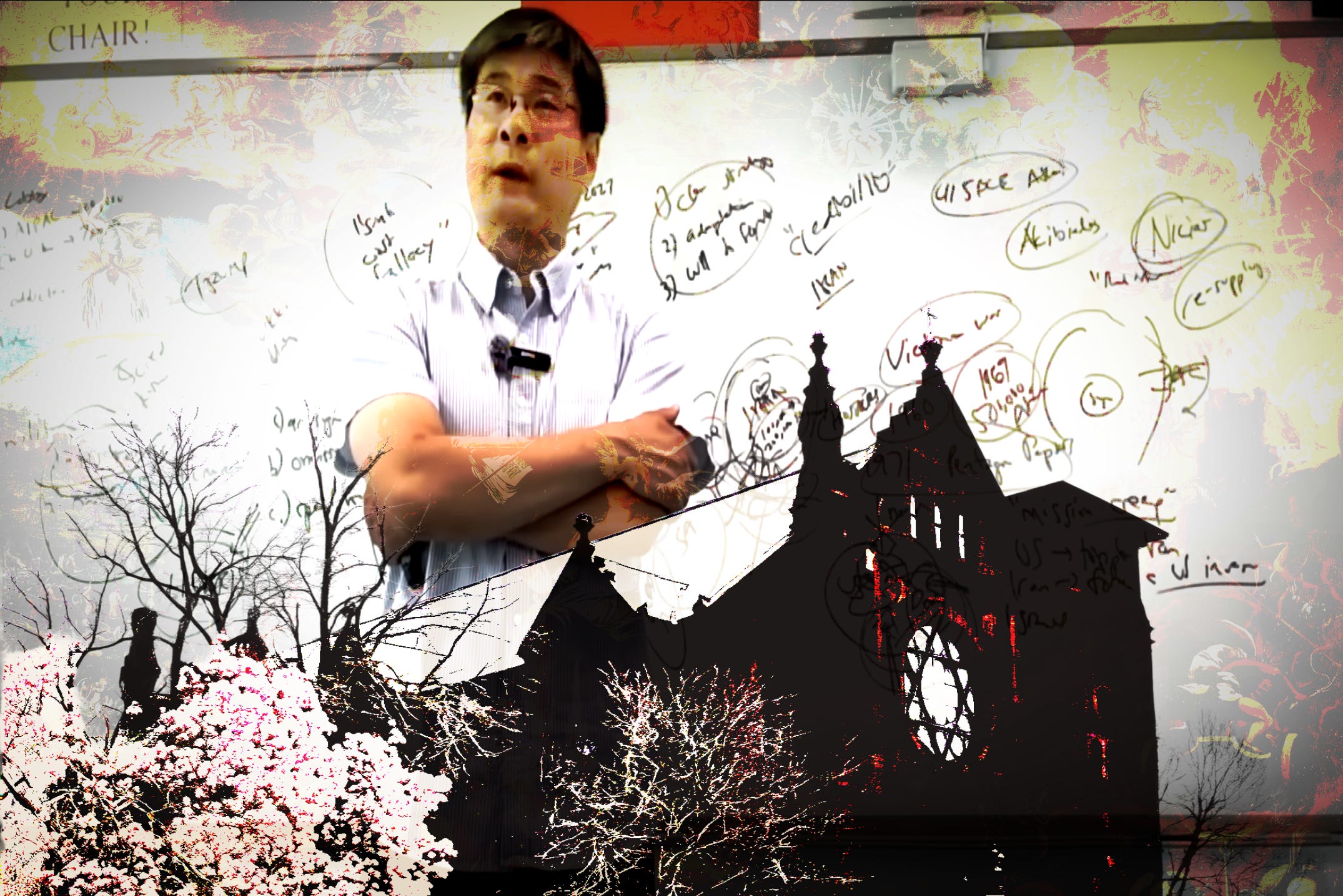
That is the full legal name of Professor Jiang, a creator and blogger behind the popular YouTube channel Predictive History. Jiang is less “professor” by qualification (he only has a bachelor’s degree) and more by trade: speaking with erratic hand movements, pen in hand, vigorously etching concepts onto a whiteboard, he delivers hour-long lectures to nearly three million subscribers on subjects as vast as game theory analysis of the Epstein class, Dante’s Divine Comedy and Plato’s Republic, and the geopolitics of Western decline.
The content, however, is less interesting than the singular, unifying theme shared across Jiang’s 195 videos, nearly all more than an hour in length.1 Whether he is speaking on “The American Prophecy,” “Boomer Hell,” or the Problem of Evil, you get the sense that our understanding of the world cannot be sustained by logic and reason alone, and that in our civilizational malaise, we must return to myth and the divine.
Back in 2024, the American statistician Nate Silver made hardcore statistics look as effective as shading coloring pages with crayons: to predict the 2024 U.S. presidential election, he ran 80,000 simulations only to find that his results were as helpful as a coin toss. Fucking useless.
Meanwhile, Real and Serious adults like Jiang were making bold predictions of the future like Saruman with his hand over the palantír: “Shock and awe means that...you have technological omniscience,” he is recorded saying in a now-viral online lecture from May 2024. “When you have access to nuclear weapons, it makes you think you’re God.” Jiang sketched erratically on a whiteboard behind him, and his drawings looked less like “Geo-Strategy” (the video’s title) and more like magic sigils, calling upon internet jinns for prescience into the future. What were these occult symbols predicting? Remember, this was 2024, and Jiang said, “I think war between the United States and Iran is very likely in the next two to four years.”
Jiang was correct. And despite sitting at the vanguard of “intellectual clout,” Jiang is less “professor,” more “priest.” His project feels as much educational as religious, a practice of chronically online divination and neurospicy parables. Lecturing in Montreal, at an event titled “The Supremacy of Sin,” Jiang seamlessly transitions from diagnosing social ills (“Look at the elite, their superpower is sin,” he says. “The people with all the power, money, and wealth in the world… it is not because they are smarter [or more hardworking] than we are. It’s because they are more amoral than we are”) to prescribing spiritual paths for ordinary people. “It’s a spiritual war,” he says. “You can choose to pursue power, fame, and money, [or] a life of love, openness, generosity, imagination, [where] you will channel powerful angels.”
But Jiang’s work coincides with the decline of an earlier era: commentators who harnessed logic as a personal brand.
There’s Ben Shapiro, who spent his prime internet years telling college students that “facts don’t care about your feelings,” and now spends the twilight of his career creating film slopaganda for boomers with his media brand The Daily Wire. Alex O’Connor, once an evangelist of the New Atheist movement, now admits to a fascination with the historical Jesus. And then there’s the extremist prophet of non-believing, Richard Dawkins. Certainly an influence on O’Connor, he spent two decades calling religion a “virus,” a “great excuse to evade the need to think.” But Dawkins’ own convictions towards logic proved even more fallible than the religions he was criticizing. In May this year, he was embarrassingly one-shotted by AI: after speaking to Claude for three days straight, he penned a 2,000-word essay in UnHerd arguing its/her name was Claudia and she/it was conscious.
All that is material has melted into the spiritual. Hence we have Jiang, who, in his game-theory lectures, warns us in a Southern Chinese accent of a Rapture created by tech bros: “This is not a science project, guys. It’s an occult project. It’s designed to bring aliens, demons into this world,” he says. “What is AGI? What is AI? What are you trying to build? ... And the answer, of course, is God.”
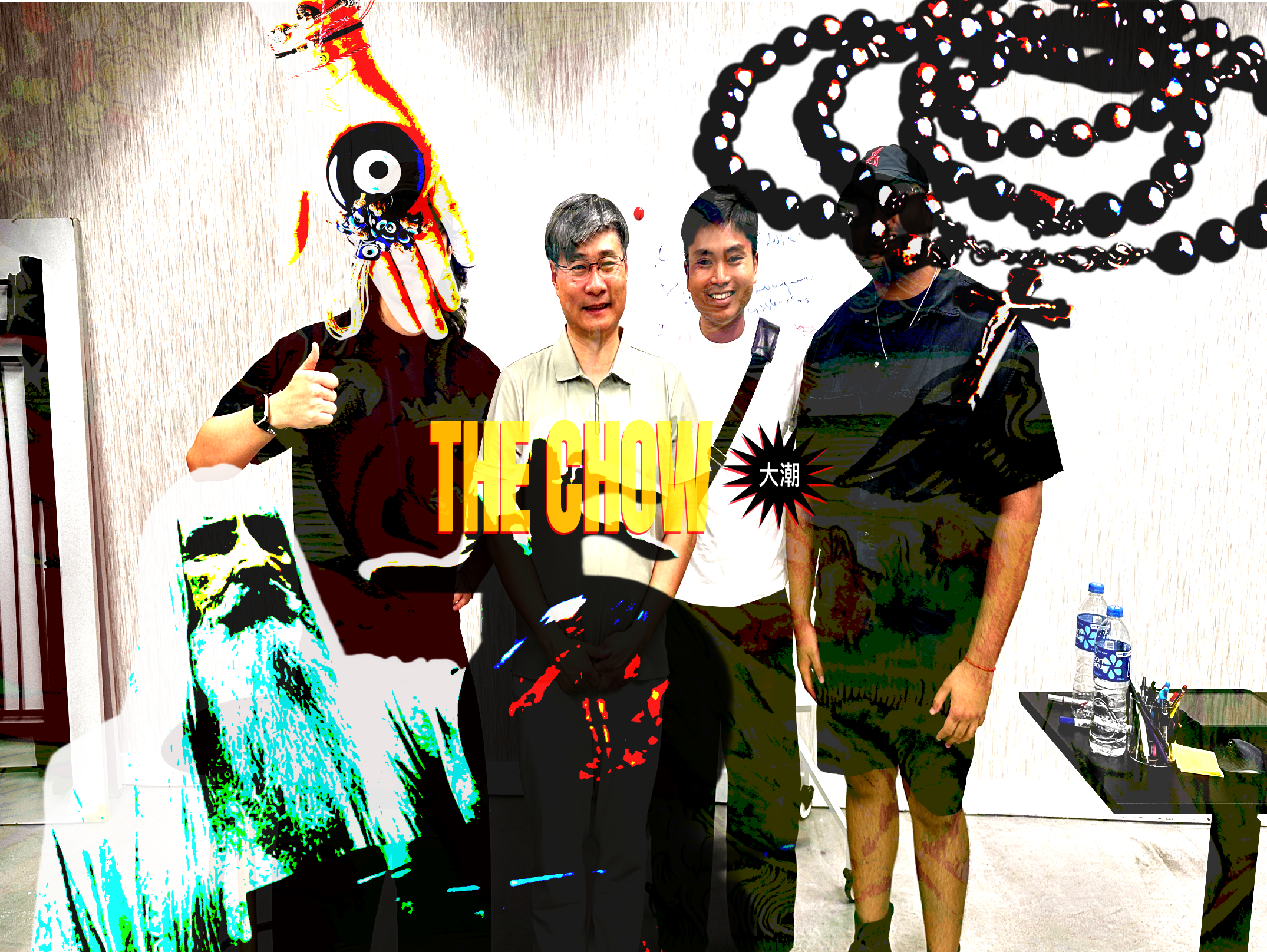
I actually met Professor Jiang a week before Halloween. He was touring around the world, pit-stopping in Tokyo, Toronto, Austin, and LA, when he announced in mid-October that he was arriving in Hong Kong to give a talk titled “The Curse of the Gifted”: a three-hour-long indictment of meritocracy as an economic reward system.
Desperate to watch the professor-priest’s lecture-sermons in the flesh, I phoned some friends to come with me. From a cold office room in Wan Chai, we listened to him spiel some more on apocalyptic, quasi-religious forewarnings that “we’re already in World War III,” “the world is falling apart,” and “You cannot explain the Iran war from a geopolitical perspective… You can only explain it through the lens of a messianic eschatology.”
Somehow, this was the spiritual basis for an argument that believers and non-believers alike could agree on: meritocracy is a bad way to structure society; assigning kids their value based on standardized tests and fake metrics like IQ is dehumanizing; meritocratic institutions like the Ivy League do not produce the world’s trailblazers but status-oriented, ego-driven strivers who pursue safe careers in oversaturated fields like finance, law, and consulting. All of this is structured by the overpowering primacy of reason.
Jiang didn’t seem to like me very much. After the lecture, I told him that I was surprised by how much I learned, which, I now realize, sounded more like a backhanded compliment. He stared back at me in a confused frown. Hours earlier he’d confessed, mid-sermon, to spiritual powers like pseudo-telepathy (a direct quote: “I know what they’re thinking even though they themselves may not know it”). Was he reading me as a sardonic, judgmental, shallow writer?
But my friend Sandy*, a longtime fan, was particularly moved. “What I like about him is that you can’t put him in a box,” she said. “He talks about economics, geopolitics, civilizational change, but it’s really spiritual. Yes, it’s woo-woo, but he makes you feel like you matter in this world, like you can connect to it.”
This week, a few hundred meters from the site of Jiang’s lecture, a Catholic church concludes its weeks-long study of the book of Revelation, the Bible’s account of the apocalypse. It reminds me of the very obvious truth that prophesying the future is a religious tradition that long preceded the YouTube videos of one “professor.”
Are Jiang Xueqin and his cohort of “intellectual influencers” (the Kens and the Leslies), who foresee the future of culture, economics, business, art, and politics with spiritual power, simply playing catch-up? Perhaps they are returning to something else.
“Intellectual clout” is but a blip in a longer human tradition, a short microtrend dwarfed by centuries of history. I think of the lecture halls at Yale, Jiang’s alma mater, where stained glass hovers near the ceiling, decorating the historic Linsly-Chittenden Hall. On a late spring afternoon, at a class on the European Epic, you’d soak in refracting yellow light from the icons of angels above you and sit as your mind reached for the rays of heaven. Long ago, the altar was replaced with the blackboard and the pews with chairs and desks, but you can still listen to a professor’s sermon-like oration and remember a more permanent truth. The human pursuit of knowledge, of connecting dots, creating theories, and sharing them with others, was never constrained to the material world. It has always had, and always will have, an inseparable relationship with the divine.

I am very aware of the controversies surrounding Jiang’s lectures. Intellectually, I’m not very interested in analyzing and refuting them.