


I often tell travelers in the city that, if they ever want to witness cultural stagnation in the flesh, then go to Hong Kong’s mainstream clubbing district. You can walk along a 260-meter stretch called D’Aguilar street, filled by bars with logos created on MS Paint and peak-era Black Eyed Peas or Drake’s “One Dance” flushing from open air entrances. Underpaid service workers—some Indian, some Filipino—populate the space outside, shove menus with weathered plastic lamination into your face, pull you by the arm, and promise tequila shots for free.
There’s one club named 33, tucked on the third floor of a tower nearing the stretch’s end, where the lines are long and the bouncers are mean and occasionally Russian, but the only thing they guard is a dance floor where the newest song played is “Unholy ft. Kim Petras” by Sam Smith, released nearly four years ago. Table service is bought, mostly, by sexpat white guys in their late-40s, youth long past expiry, who just stand, close to motionless, and nod in sync with the bass drop, while their fifteen-years-junior Thai girlfriends shake ass and offer free alcohol, “free” because the men paid for it, to young club goers whose presence alone prevents 33’s cool from flatlining.
There is a reason Hong Kong’s mainstream clubbing scene, clustered around the historic Lan Kwai Fong district, is a Neverland of lost futures. When the commercial rent is high and the threat of closure is real and the youth have no money for a costly cover charge, then DJs refuse creative risk-taking and waiters plead desperately for you to buy a drink. Precarity comes first, then stagnation, as tastes eventually become dictated by monied, middle-aged millennials with Peter Pan syndrome. A popular DJ in the scene once complained to me that, “It’s been 14, 15 years since they were popular—Lan Kwai Fong is still playing the Black Eyed Peas.”
It’s easy to dismiss a stagnating club culture as trivial. But I can promise you there’s much more at stake here. Because when DJs start recycling playlists for more than a decade, we lose a “whole mode of social imagination.” Such was the warning of the late philosopher Mark Fisher, who believed that electronic music—often born in the club—was how humanity gained “the capacity to conceive of a world radically different from the one in which we currently live.”
After all, the club is where subculture is frequently incubated and new music is found. Jazz in particular owes its rise to the underground, gangster-run jazz clubs, which platformed the genre when its sounds were outlawed from public life in America, during the 1920s. Likewise, “disco” today describes the defining music genre of the ‘70s, but the word was first an abbreviation of the “discothèque,” the French nightclubs exported around the world. It was in venues like New York’s Studio 54 where Donna Summer’s “I Feel Love” was often played, where disco was raised to maturity.
Summer and her producers were proponents of how synthesizers, sequences, and software could create a sound that evoked a science fiction film, that hinted towards a future of universal, collective pleasure. Eventually, this utopian dream would be later found in Cybotron, the early techno pioneers whose darkly mechanistic, looping style evoked the alien. These sonic techniques scrambled the ability to assign identity to music, which, when the sound took the dance floor, imagined a society where class, race, and gender ceased to matter.
But where does this lineage find itself today? And has a stagnating club culture killed the dream of a utopian future?
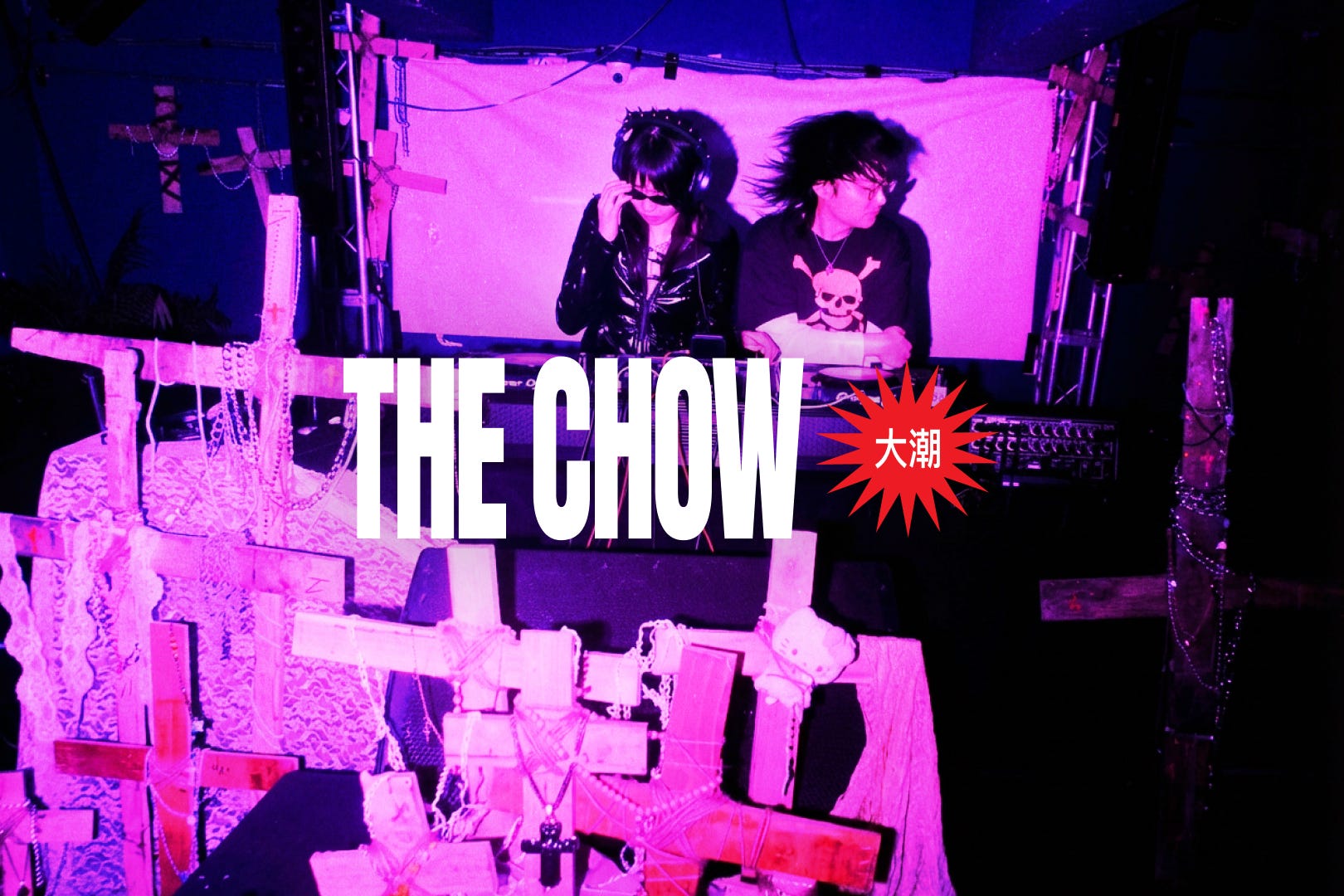
“When you think about raves or clubs, you think about drugs, people dressed in black, stylish in Balenciaga. But it doesn’t need to be just that,” LOVELESS, a DJ in Hong Kong’s independent rave circuit, says. “It can be many things: punks and emos can exist in the same space.”
LOVELESS, along with Manila-born DJ Baby Diwata, are using stagnation as a way to create something new: the duo are the founders of Panic Library, a punk art and rave collective based in Hong Kong, which, for a little over a year, has been injecting sounds from hardcore and deconstructed club into the local scene.
“I don’t know any club in Hong Kong that would allow us to play [these sounds],” says Baby Diwata. “I grew up in the Philippines. And I always looked up to this queer party collective called Elephant. When I moved to Hong Kong, I was like, wow, something’s missing. I was fed up with these bros playing boring music and people just being okay with it. The bros were booking other bros.”
Panic Library, which acts as “a space and platform for women and queer artists and audiences,” was what Baby Diwata felt she needed to do.
“That punk mentality of ‘everyone can and should take up space [at a party]’ is something I’m trying to bring forward,” says LOVELESS.
“For Panic Library, it’s more about making sure that people outside of [our core audience] respect the space,” Baby Diwata says. “Because at the end of the day, it’s also about the music. And there’s a lot of hardcore kids who want to freaking rock and join the party.”
Said parties travel in secret between warehouses in Hong Kong’s industrial districts and collapse a vast set of references into one world. Black and pink branding, cut-out collage-style graphics, and generous use of red-purple strobe lights all draw inspiration from riot grrrl, the American feminist punk movement of the ‘90s. But the project’s branding also extends to include references to the co-founder’s interests and upbringings: LOVELESS pulls their DJ name from My Bloody Valentine’s shoegaze album Loveless, and draws aesthetic inspiration from fantasy games like Dark Souls and Magic: The Gathering; while Baby Diwata derives her alias from the “diwata,” an indigenous Filipino nature spirit, and regularly integrates Catholic imagery into Panic Library’s branding. In one of the collective’s launch posts, she is seen dressed like an angel, and reading The Bible.
“We want to have this world where people are free to create ideas that aren’t so accepted in the mainstream,” says Baby Diwata. “For me, I gravitate towards music that’s quite sexy, dystopic, and experimental. The sound is quite abrasive but there’s a nice swing to it. Something about the hard bass is so masculine, and a swing to the beat is so feminine. I love when it comes together and creates this new genderless sound.”
That genre-fluidity is characteristic to the sounds of Panic Library. In the words of British music journalist Simon Reynolds, hardcore is a “continuum” of “drastic stylistic shifts,” and the DJ duo’s own sounds echo this propensity for real-time evolution.
The pair’s sonic tastes include popular hardstyle acts like Snow Strippers, drain gang, or Underscores, but LOVELESS might mix a club-y Caroline Polachek track into a rock song by Bloc Party, or blend the sounds of Romanian producer Miss Jay with American rapper Playboi Carti back to back. Meanwhile, Baby Diwata’s “biggest inspirations” include “brutalist” techno artist KAVARI and experimental reggaeton producer Safety Trance; her drops as a DJ are characteristically hardcore, but recently Baby Diwata has incorporated drops from “dubstep and Baile funk.”
“When you say, ‘hardcore,’ people usually think 160-BPM or up, sounds that are hard and abrasive. But for the last rave we did, we ended up inviting a DJ duo that plays hyperpop and bass,” LOVELESS says. “The music that we create is not just hard in sound, but also hard in spirit.”


“Hard in spirit” is probably how I would describe my most memorable club experience. Panic Library was hosting a rave inside the dark room of a warehouse in Kowloon. Manually-hammered wooden crosses, dressed with DIY rosaries, clustered in the front of an elevated DJ booth like a makeshift cemetery for island castaways; behind the decks, the words “START A FUCKING RIOT” cast in pink and black by the glow of a projector.
My feet were growing sore, dancing at an hour when the industrial buildings in the streets outside outnumbered cars and people, along to the outro of A. G. Cook’s “Britpop,” where the speed of the track had been nearly doubled and the chorus had been layered over a hard bass. My energy was about to expire, until I heard “Person (Angel Mix)” by Petal Supply, a Canadian hard trance artist, for the first time.
For the song’s entire three-minute runtime, the beat accelerated and the pitch ascended upward—a marathon-sprint towards crescendo. Hearing the mechanized vocalizing of an angel and the elongated purr of the synthesizer, I reached into the air, swayed in a sea of purple strobe lights and my own sweat, and felt the waves of the dance floor wash me towards something new—like a destination undiscovered, or a world yet-to-be.
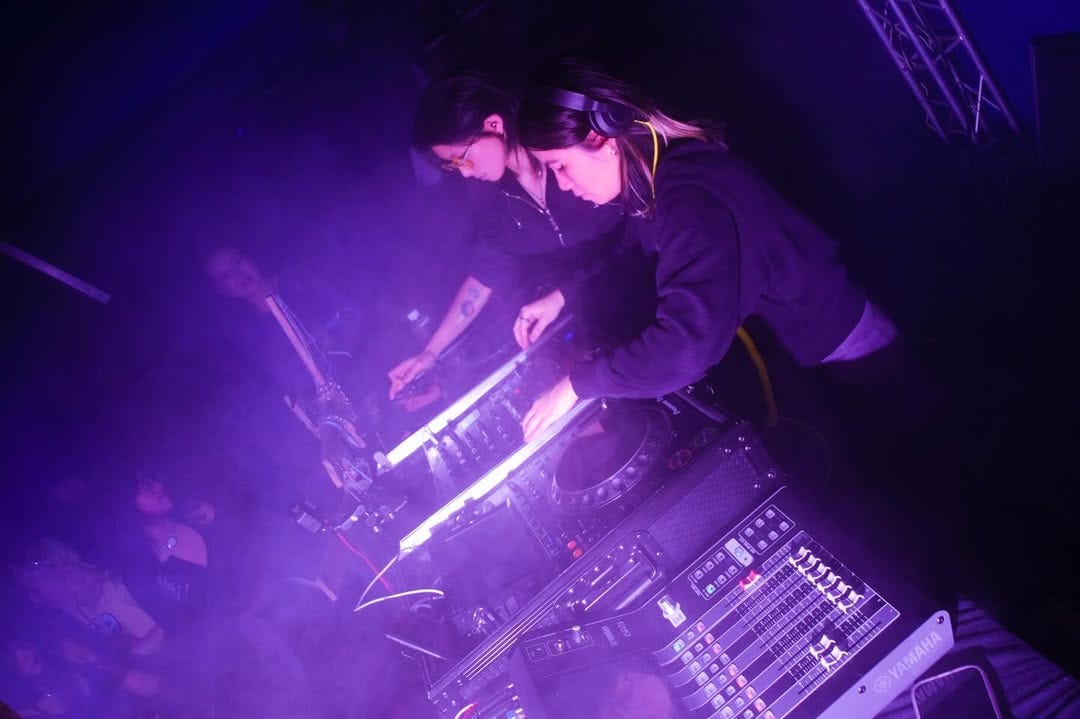
“It sounds like you’re constantly reaching for something. It’s very euphoric,” says Rena Izokay, the DJ and music producer behind that set. ““Person” isn’t like a normal EDM song, where you’re taking away energy and building to a drop. The song is high energy, and it’s just building—but I don’t know what it’s building towards.”
Rena, whose sonic influences include hyperpop legend SOPHIE and the PC Music label, once tried bringing these sounds to Hong Kong’s mainstream clubbing scene. But since tracks in the genre often lack clear structure, the city’s club managers weren’t too receptive. “[One of them] told me, there’s no intro, there’s no outro. It’s hard to DJ,” she says.
But electronic music never had to follow strict rules of form. “To me, when making music, I’m not willing the song into existence. It’s more like a discovery process, in some ways it’s relinquishing control,” Rena says. “It’s almost like I have to ask the song, where do you want to go?”
Writing for The Wire in 1992, Simon Reynolds once observed that hardcore “abolishes narrative: instead of tension/climax/release, it offers a thousand plateaux of crescendo, an endless successions of NOWs… It’s an apocalyptic now, for sure: [hardcore] fits only too well the model of terminal culture… ‘a switch from the extensive time of history to the intensive time of momentariness without history.’” This can easily be read as pessimistic: that unlike the synthesizers of disco and techno that sounded utopia on the dance floor, hardcore’s soaring tempos and “octave-skipping synth riffs” bring us to no final destination. This gritty, abrasive sound reverberates the slow cancellation of the future, where we are locked forever in the present.
But when I listen to hardcore—and intersecting genres of trance, deconstructed club, and hyperpop—it feels more like a state of constant sonic discovery: bass forever drumming in a constant head turn, synthesizer switching between directions left and right. “Momentariness without history” is not a curse, but an invitation to relish the world as it is, and instead imagine the future through our everyday actions: “I think the future happens bit by bit, person by person,” says Baby Diwata. “Working with artists and friends that we admire… that’s how we’re building our imagined future through Panic Library.”
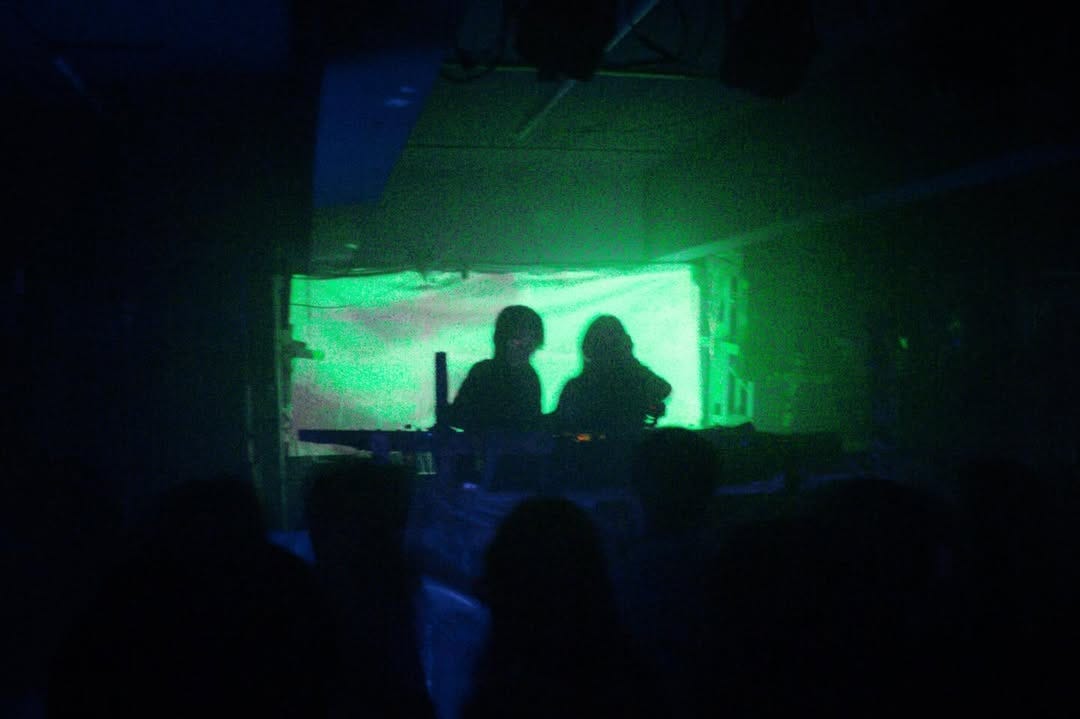
There’s a schizophrenia of contradictions in a punk meets cradle Catholic meets Dark Souls meets PC Music meets Filipino folklore meets hardcore and deconstructed club rave project. And there’s no exact reason why it should exist. But for me, Panic Library proves that club culture still imagines a better future: When steered by people with agency, vision, and taste, dance floors resist cultural stagnation, and introduce us to new worlds that we could never imagine on our own.
Besides, “my hot take is that nothing’s ever truly new. If you look at rock n roll, it comes from blues. If you look at hardcore punk, [a lot of it is inspired by] Iggy Pop or even raggae and dub,” LOVELESS says. “What we do as DJs is pull our own references together, new and old, and somehow it sounds refreshing… you make something new from that.”
In the world of independent nightlife, long-term planning is an impossibility. A month can spell the difference between a thriving scene anchored in one nightclub and its eventual closure. In a state like this, imagining the future is difficult, yes, but it is still possible, if only through the tireless work of the day-to-day: “I’m not worried about rave culture in Hong Kong dying,” says Baby Diwata. “We know so many organizers that are just doing their thing, keeping so many genres alive.”
“There’s all these talks on how do we keep club culture alive? But I think that’s killing it. I don’t know what the future is,” says LOVELESS. “I’m not even thinking about the future, because I believe in Hong Kong and I believe in our people. If we’re doing what we love now, it doesn’t really matter.”
“I was just talking to friends [in the Philippines] about how their lives are going,” Baby Diwata adds. “We did touch a bit on the future. And we all said we can only think of the present. Because of the war going on, the future, on a bigger scale, is not guaranteed. All we have, really, is the present. To keep going, day-by-day, to keep supporting our friends and our communities.”

This is a shot in the dark but I feel like part of the reason why clubbing is stagnating is because of the recent obsession with community-centric spaces (hence bars being more popular). As in, people think of clubs as shallow experiences and places where you cannot "enjoy" yourself or "make friends". Clubs are definitely seen as lesser than or superficial and in attributing this nature to them people kind of misconstrue what they could be (or once were).
Love this article, in the face of Charli XCX's comment about dance music being dead it's important to assess what the club space looks like. In London, there's definitely been a growing appetite for new club spaces or ideas, collectives and third-space type venues that facilitate all kinds of nightlife