


Two weeks before Halloween, and they are hanging ghosts on overhead lines, roughly two stories above street level, in Hong Kong’s main clubbing district: Lan Kwai Fong. Floating sheets with cut-out holes for eyes surround a purple sign that says “MONSTER MASH”—the branded tagline for the city’s festivities through October.
I like to think of the hanging ghosts as guides and guardians, patron spirits of teenagers and white sexpats on benders, partying all month in the bars beneath them. As Carl Jung said, spirits—or what stands in opposition to matter—are what “vivifies, stimulates, incites, fires, and inspires.” For the Swiss psychiatrist, ghosts appear when insight and understanding, advice and planning “are needed but cannot be mustered on one’s own resources.”
Such guidance becomes a necessity in the days leading up to October 31st, when the city prepares for Halloweekend and the clubbing district soon becomes flush with partygoers. Lan Kwai Fong’s 110-meter-long L-shaped street does not have enough space to hold the hundreds of skin-shaved gym bros dressed like Spartans or Sailor Moon, the cultural appropriators in Mexican straw hats and maracas and serapes, the boyfriends and girlfriends as cowboys and cowgirls, the un-creatives wearing onesies, the sluts and the slags (male, female, or otherwise) revealing too much skin. Regardless of who you are and what you wear, clubbing in Hong Kong on Halloween is a battle for the air you breathe and the ground beneath your feet.
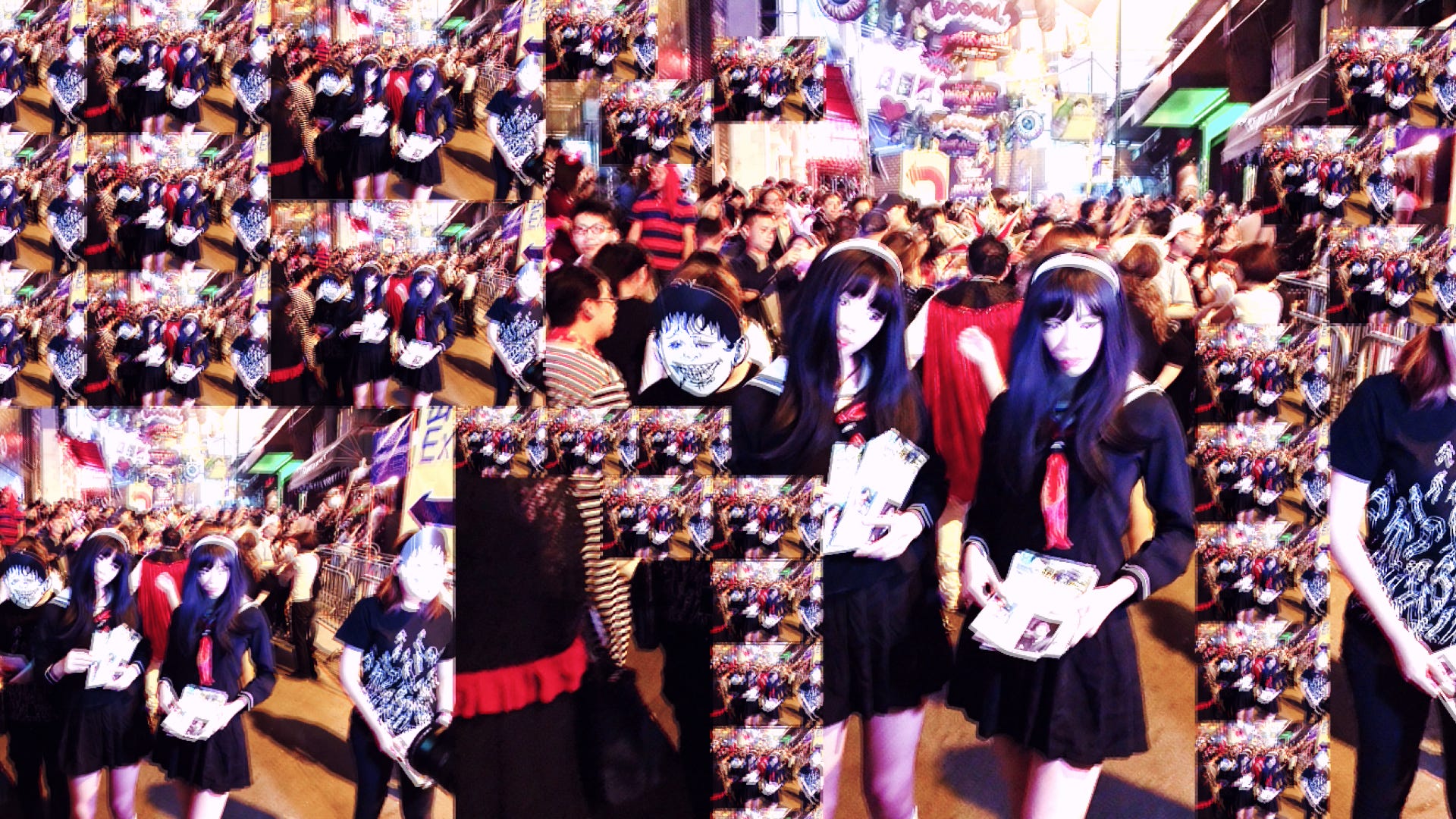
I remember my early days celebrating Halloween in the city, when lines to the clubs could extend all the way to the nearest subway exit. “Packed like sardines” would’ve been a gross, vulgar understatement. It’s a river of hundreds of people, and the dam is about to burst: warm bodies of hot blood and sweat arrive with the pressure of a fireman’s hose. Naturally, policemen arrive to guide the flow of traffic, halting you with barricades to prevent a stampede. You will wait in the crowds for more than an hour, standing skin-to-skin beside Pikachus and players in Squid Game as your makeup or face paint melts into air.
C45, a now-shuttered venue, would be quiet on most Saturdays. But on Halloween 2021 it had model-promoters wincing for air, girls pounding on the backs of boys begging for space. Even the lamest clubs could suffocate you inside. My friends and I stood there, near an elevated platform towards the DJ booth, eyes darting left and right and up and down, looking for any opening to reach the exit. It took us about half an hour to find one.
One can read these events as a kind of triumphalism—as local influencer Alex Gostic claimed last year, “You’re missing out if you’re not in Hong Kong for Halloween.” The crowded Halloweekend club night is so ingrained in the city’s DNA that not even a global pandemic could stop it. A video shared by the South China Morning Post puts this exuberance on display: “HUNDREDS celebrate Halloween in Hong Kong’s popular nightlife district DESPITE Covid-19,” reads the title.1 Over B-roll cutaways to “HAPPY HALLOWEEN” banners and pumpkin balloons on bar entrances, a Filipina partygoer donning devil horns tells the Post, “Lan Kwai Fong is the best place to celebrate Halloween. No need to think about the coronavirus… as long as you have good hygiene.” Across the Pacific, the United States was setting a new world record for COVID-19 cases; Boris Johnson declared England’s new month-long nationwide lockdown.
I remember because I was there, celebrating my first adult Halloween at the now-shuttered PLAY. Friends filmed the movement of bottles between tables for Snapchat stories. We stood on top of couches, speakers an inch from our ears, heady in the early, naive optimism of life under China’s Zero-COVID policy, faces free of polypropylene covers, singing to “Mask Off” by Future.
Elsewhere on the continent, in Poblacion, Manila’s “it” nightlife district, bars collapse the city’s AFAMs (local term for a white foreigner) and alt-queers into a single square kilometer of Japanese-style bars and Mexican grills and clubs that play horror-film-inspired DJ sets. On a single Halloween night, there are hundreds: “You [can only] settle into a maximum of two or three shindig locations,” reports Esquire Philippines, “since most of the popular ones will be filled to the brim if you don’t come early.” Ann, a trend forecaster friend of mine who celebrated Halloweekend there last year, said the claustrophobia was too extreme. With too many people, with too little guidance on the flow of traffic, this year she’s celebrating elsewhere—Ann says she’s worried about a crowd crush.
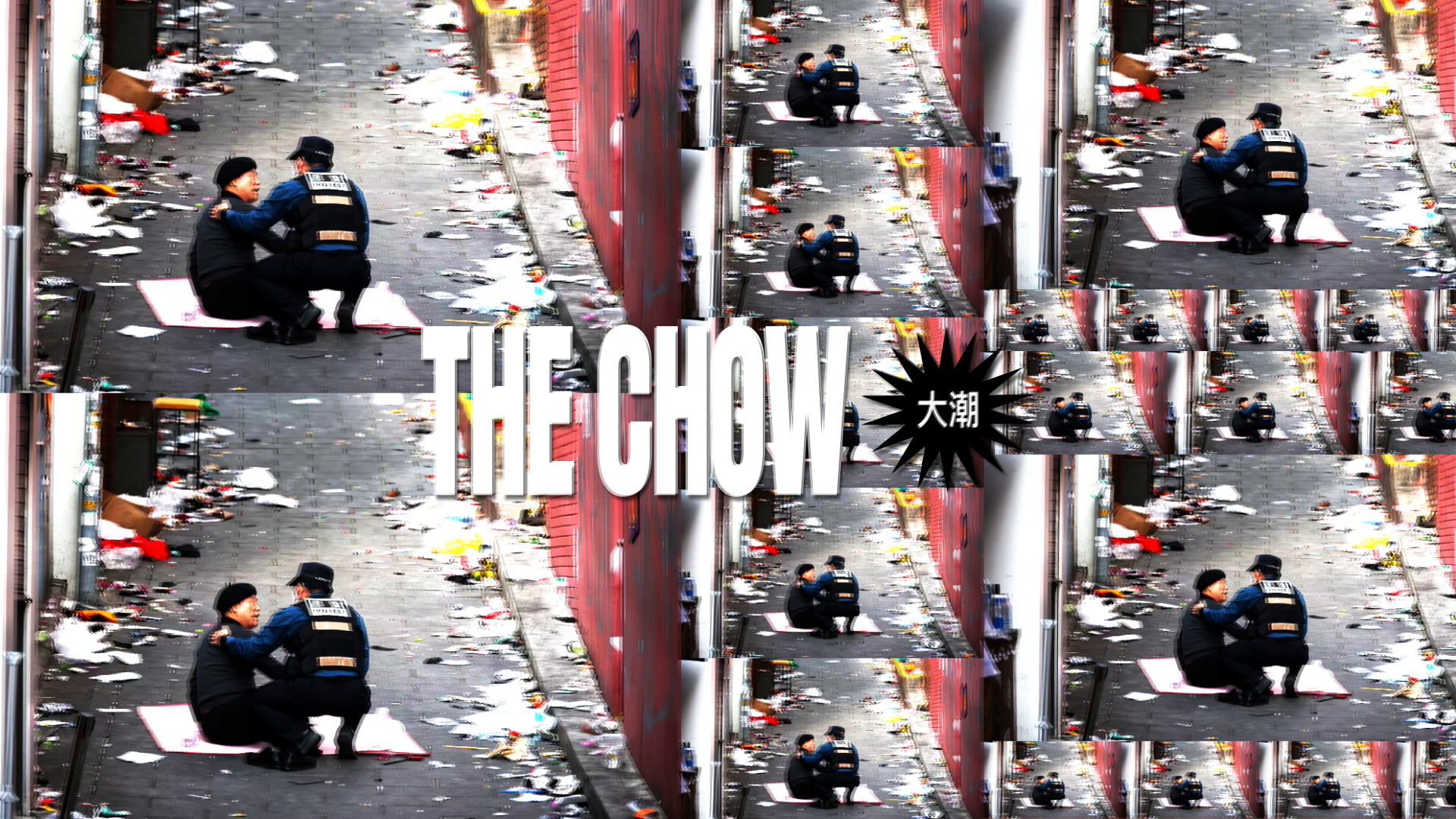
The possibility of triumph brings the possibility of trauma. And fears like Ann’s are not unfounded: in Seoul, on October 29, 2022, at approximately 10:20 p.m., a crowd surge occurred in the city’s Itaewon neighborhood. One hundred fifty-nine people died as a result.
That weekend was meant to be jubilant. Seoul was preparing for its first Halloween festivities after years of coronavirus lockdowns. Pandemic restrictions were lifted after two long years, and “as many as 100,000 people,” traveling from abroad and across the country, “poured into Itaewon’s narrow, sloping streets,” The Guardian reported. According to eyewitness accounts, crowds began surging from the front and back entrances of the neighborhood. One video, allegedly recorded seconds before the disaster, portrays partygoers crammed together, pushing one another, rising and falling, the crowd cascading like a wave.2 No police were present to direct traffic, even though authorities were estimating a Halloween gathering in the hundreds of thousands. More and more people lost their footing, bodies fell from both directions, piling on top of one another, suffocating them.3
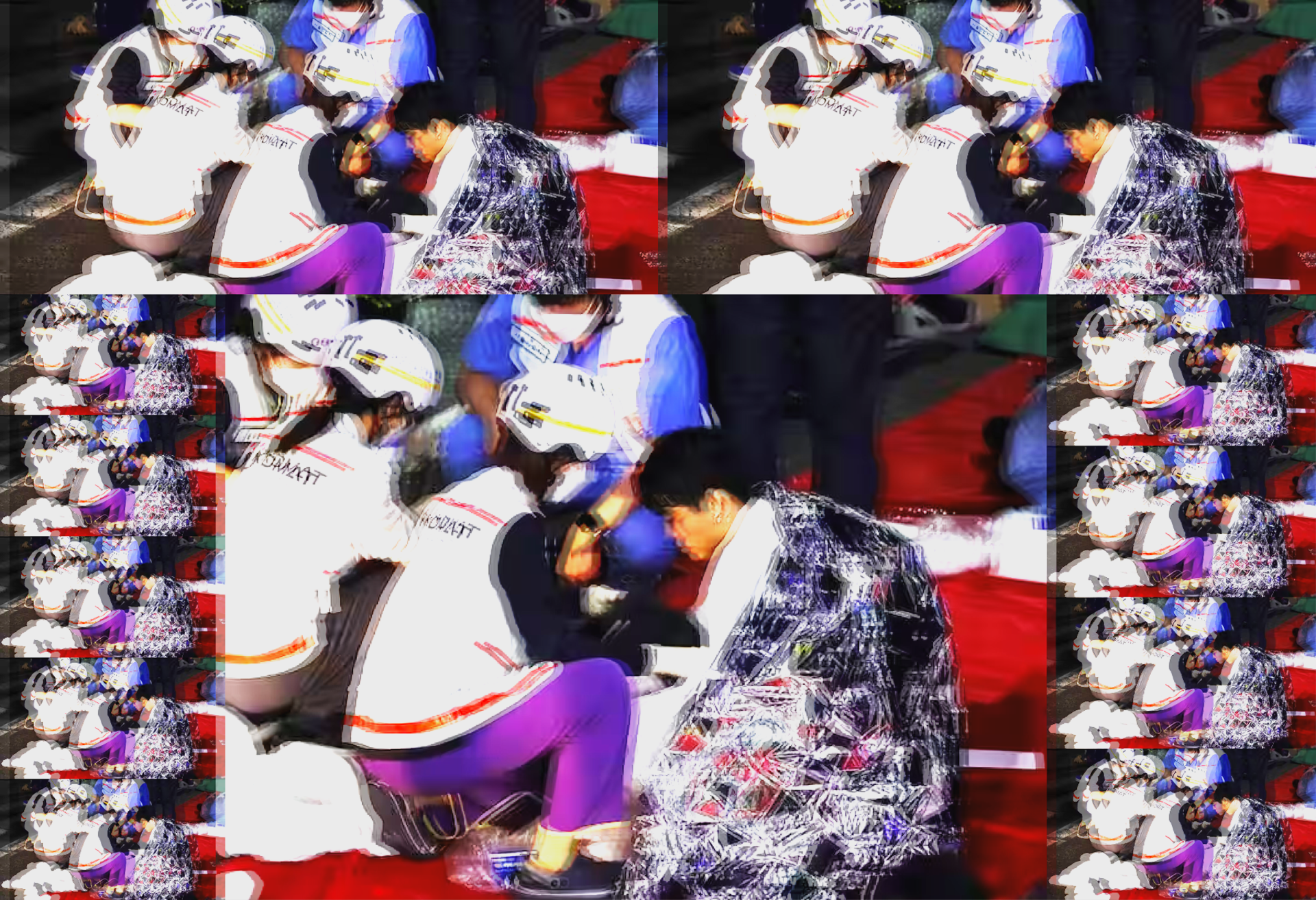
Of the 159 dead, most were women in their twenties. Around a dozen were teenagers. As the police arrived, many partygoers, still clad in costume, were performing CPR on bodies lined up along the slope. In The Washington Post’s account of these events, a young man sat on a nearby stoop, dressed like Spider-Man, staring blankly into the distance, “as the screams and wailing of witnesses and survivors rang out around [him].”
What makes surging, compact crowds on Halloween such a defining feature in cities across Asia? One way to answer that question is to first study how these concentrated nightlife districts were built. Across the region, the nightlife district emerges as a kind of accident of globalization.
In the case of Hong Kong’s Lan Kwai Fong, bars and nightclubs slowly trickled into the neighborhood in the late 1970s, as Alex Lui traces in Urban Design Futures—rent at the time was relatively affordable, and lots strategically located in Central were a short walk from the offices of investment banks and multinationals. White-collar expats working in these offices served as the initial core market in the 1980s. And by the time the neighborhood developed into a “district” in the ’90s, its concentration on a 110-meter street created market synergy; it heightened its appeal to consumers and allowed the demand-sensitive nightlife industry to thrive.
A parallel history runs through Manila’s Poblacion, where demand from foreigners was pivotal in developing the neighborhood as a nightlife hub. A lone budget-friendly hostel for backpackers from abroad, Z Hostel, was the first to experiment, bringing young people with budgets together for drinks and music on its rooftop bar. “It became a huge party place when this first opened, it was kind of like a spark. Everyone was like, Oh we can make this a really cool bar street,” Filipino food creator Erwan Heussaff says in a FEATR documentary. “From that spark, fire.” Itaewon also has its origins in fulfilling foreign consumer demand: in 1997, the Seoul Shinmun described the singular slope as “a foreign country within Seoul.” It was occupied by Japanese forces during Korea’s colonial period (1910–45) and later, American Armed Forces; in the ’70s and ’80s, it developed a commercial area of saloons and bars that targeted Americans living nearby.
You can find a similar story in Shanghai, as Andrew Field and James Farrer trace in Shanghai Nightscapes, in which “bars first arose in the 1980s to cater to the return of foreign nationals to the city, including overseas Chinese.”4 Or take the histories of Bangkok’s Thonglor, where izakayas opened to serve Japanese expats; the bars in Tokyo’s Roppongi, which sprang up to cater to American GIs; or Sanlitun, a district that emerged from Beijing’s embassy quarter.
If the Asian nightlife district is born of the whims of expat consumers with favorable exchange rates and enough money to spend, then what of the trauma of Halloween? Of creating cities that pack thousands of partygoers into tiny streets? There’s a lazy and uninteresting but not-100%-incorrect argument that this is a small node in a grand theory of capital-C Colonialism. But I’m partial towards a different reading.
Science-fiction author J.G. Ballard interpreted the car crash as the defining trauma of modernity: the automobile, at once a symbol of progress and of the speed of capitalism, becomes the force that inflicts irreversible violence on the human body (see: his 1973 freak novel about car crash fetishists, Crash). What about the trauma of hyperglobalization? When the arrival of people from abroad hits a critical mass, numbers reaching far beyond what cities can possibly hold, when expat wallets stack dozens of bars and clubs and speakeasies into a single strip a tenth of a kilometer long, that trauma is the crashing of bodies onto one another, the surging, skittering of a thousand feet towards the music of the party, celebrating the end of fall and the beginning of winter. It is Halloween.

Emphasis mine.
A crowd scientist told The Guardian, “there were waves of people that lifted people off their feet.”
Read “In Itaewon, Another Betrayal of Young Koreans” in The New Yorker.
Venues like Yesterdays, Jam’s Bar, Little Jinjiang, Jane’s, Napoleon, Cherry Bar, and Manhattan, “located near the Sheraton and Hilton hotels… all focused on the overseas clientele.” See Shanghai Nightscapes.
amazing writing as always <3
you've unlocked a core memory of me learning about the '93 nye stampede in lkf, shortly before embarking on my first adult nye lol. the pathos of hoping for a night where you will be special, exceptional, while hurtling in a red cab towards the throng. T_T