


At the height of Mussolini-era fascism, Antonio Gramsci wrote in his Prison Notebooks, “The old world is dying, and the new world struggles to be born: now is the time of monsters.”
The Italian Marxist philosopher supposedly etched these words while locked up in Rome’s Regina Coeli, afflicted with headaches so violent that he would beat his skull against the prison walls. But listen to how they’re used today and the Communist’s words read less like the ramblings of a dying, diseased man and more like prophecy.
Gramsci finds strange bedfellows in right-wing politicians, brand marketers, and Gen Z filmmakers alike: his original quote appears in speeches by Bart De Wever, the Prime Minister of Belgium, or in short-form videos by Eugene Healy, the internet personality and strategist. And while never mentioned explicitly, Gramsci’s words, to me, form the core thesis behind Backrooms, A24’s breakout film of the summer and the directorial debut of 20-year-old Kane Parsons.
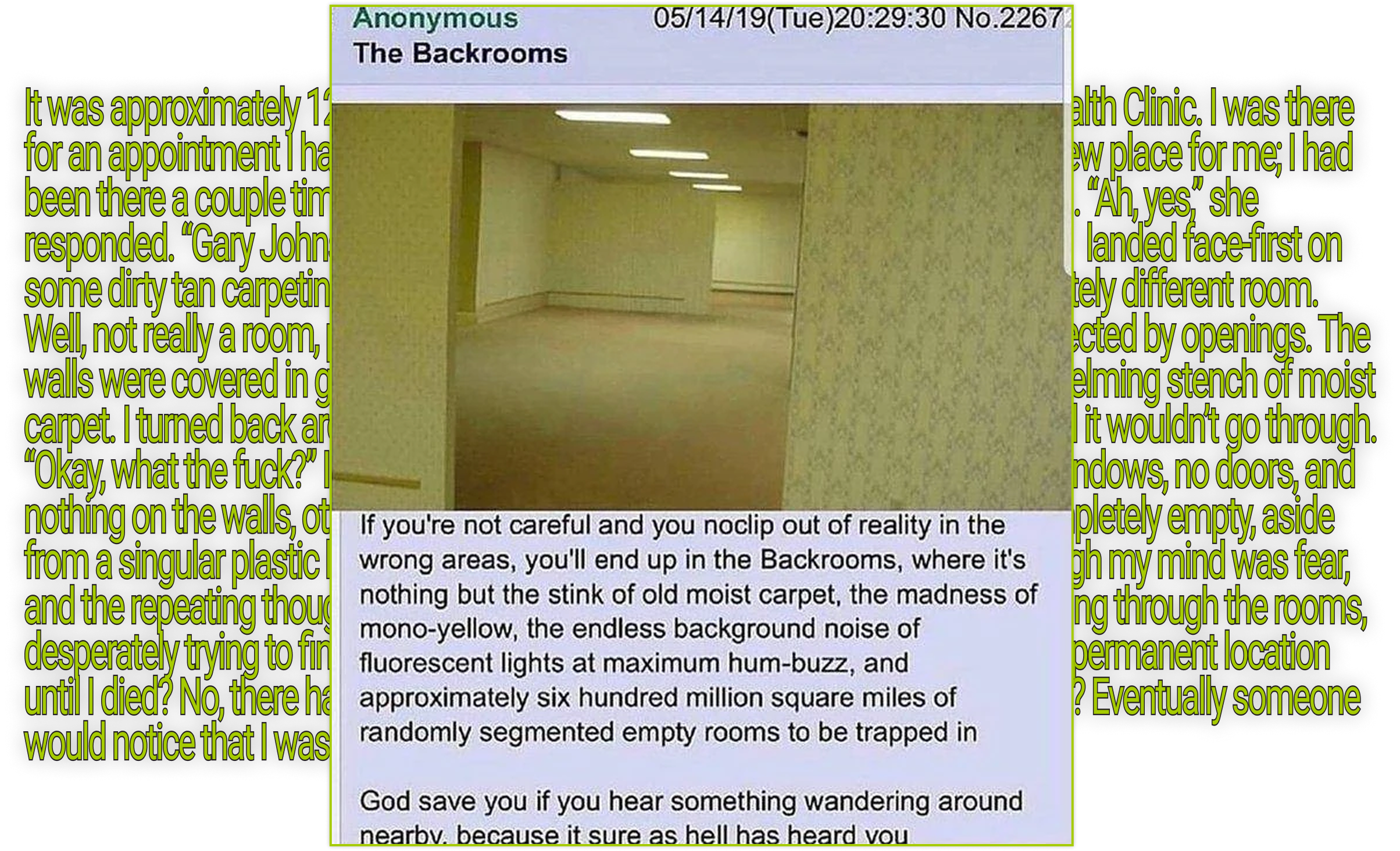
Parsons’ film takes us through the “Backrooms,” a fictionalized, quasi-parallel universe, built like a mock-up of the real world, though not quite (to borrow a line from the film itself, they mirror our reality, but it’s like if you asked someone who’s never seen a dog to draw one from description). Clark, the film’s protagonist, enters a part of the backrooms that looks like a musty office from the ‘90s. From the yellowing walls, molding, unwashed carpets, and warm overhead lighting, you can practically smell the mildew through the screen. All this coalesces into an uncanny, unreality: dog-sized tunnels that connect rooms in place of hallways, floors connected by trash chutes rather than staircases, or doors that open to pure cement and serve no purpose besides decoration.


One can read this as a kind of LLM hallucination—what if you fed Grok a building plan, and it garbled, vomited, and spat it out in return?—but Backrooms’ main inspiration predates the advent of AI. Parsons’ story was primarily inspired by a 2019 creepypasta—text-based horror circulated through online forums—of the terror of waking up in a dilapidated ‘90s office building with the “musty, wet smell of carpet … that should have been changed decades ago.” A kind of liminal space where pure unknowing induces fear. One Vice writer argues these spaces sit on the precipice of new and old, familiar and strange. No surprise then that in this uncanny unreality, not quite here nor there, it is “the time of monsters”: In both Parsons’ film and the creepypastas, seven-plus-foot-tall monsters roam the backrooms, trampling, decapitating, and devouring any humans in a manner a la Gramsci.
For these reasons, I’m inclined to think that Backrooms is as much a film about economics as it is a psychological horror: the story takes place in the ‘90s (the office interior design and VHS footage make that clear), but the larger universe documents “the odd transitional period of the 2000s, where things from the past sat almost completely unchanged, unmaintained, buildings unrenovated,” Chris Frewerd, the original writer of the backrooms creepypasta told Vice.
In between the 2002 dot-com bubble and the global financial crisis of 2008, global GDP more than doubled and China rose as an emergent economic power. The first decade of the new millennium was one of seismic-level shifts. In recalling these events today, Parsons and the creepypasta writers are narrating the Gramscian milieu du jour, where rapid economic, social, and technological change in the 2020s guarantees a new world knocking at the gate. System-wide upheaval is simultaneously imminent and yet-to-be, and you sense that Parsons believes the monsters embody the population-wide unknowing of what comes next: “There’s a lot of simplicity in the setup that preys on the anxiety people have around the stage of industrialization we’re at,” he says in a profile with The New York Times. “The world is becoming increasingly atomized and sort of lonely. We have so much available to us now—at least in this part of the world—yet it feels like all the stuff we have means less and less.”
When past decades of change are deployed to narrate the approaching upheaval today, what does it amount to? Shirley Lau, a curator at Asian cultural think tank Serakai Studio, has a vocabulary for it that spans geographies: “dreamcore,” a “shared feeling [and] experience under massive changes.”
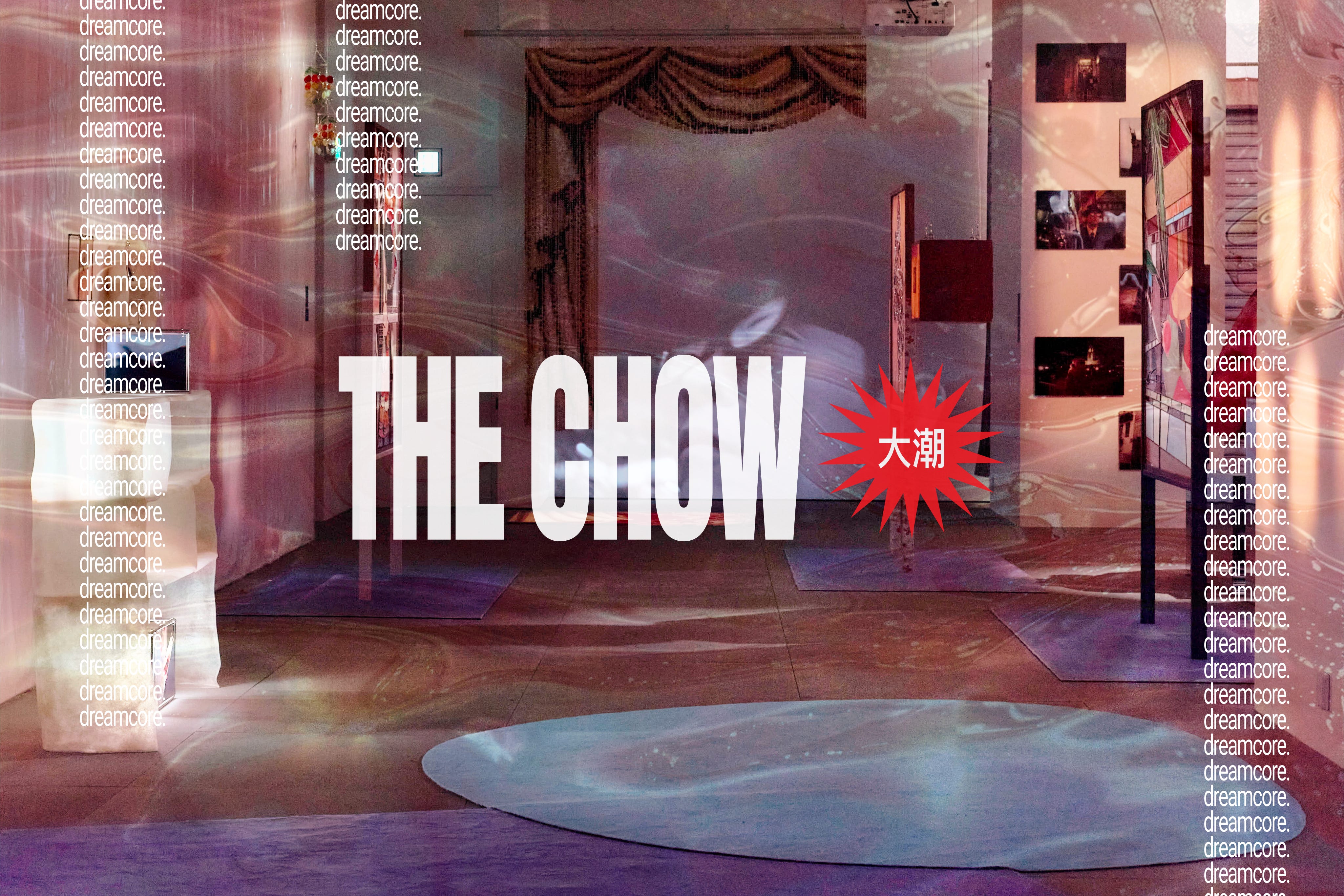
Dreamcore is the main subject of “dreamedcore,” a new exhibit by the Hong Kong based contemporary salon, GOLD, “bringing together artists, designers, fashion labels, and creative studios from across Asia.” The exhibit argues that dreamcore is neither style nor subculture, more a generational condition felt by creative practitioners born in the ‘90s, “growing up amid tremendous urban change and now hitting their 30s.”
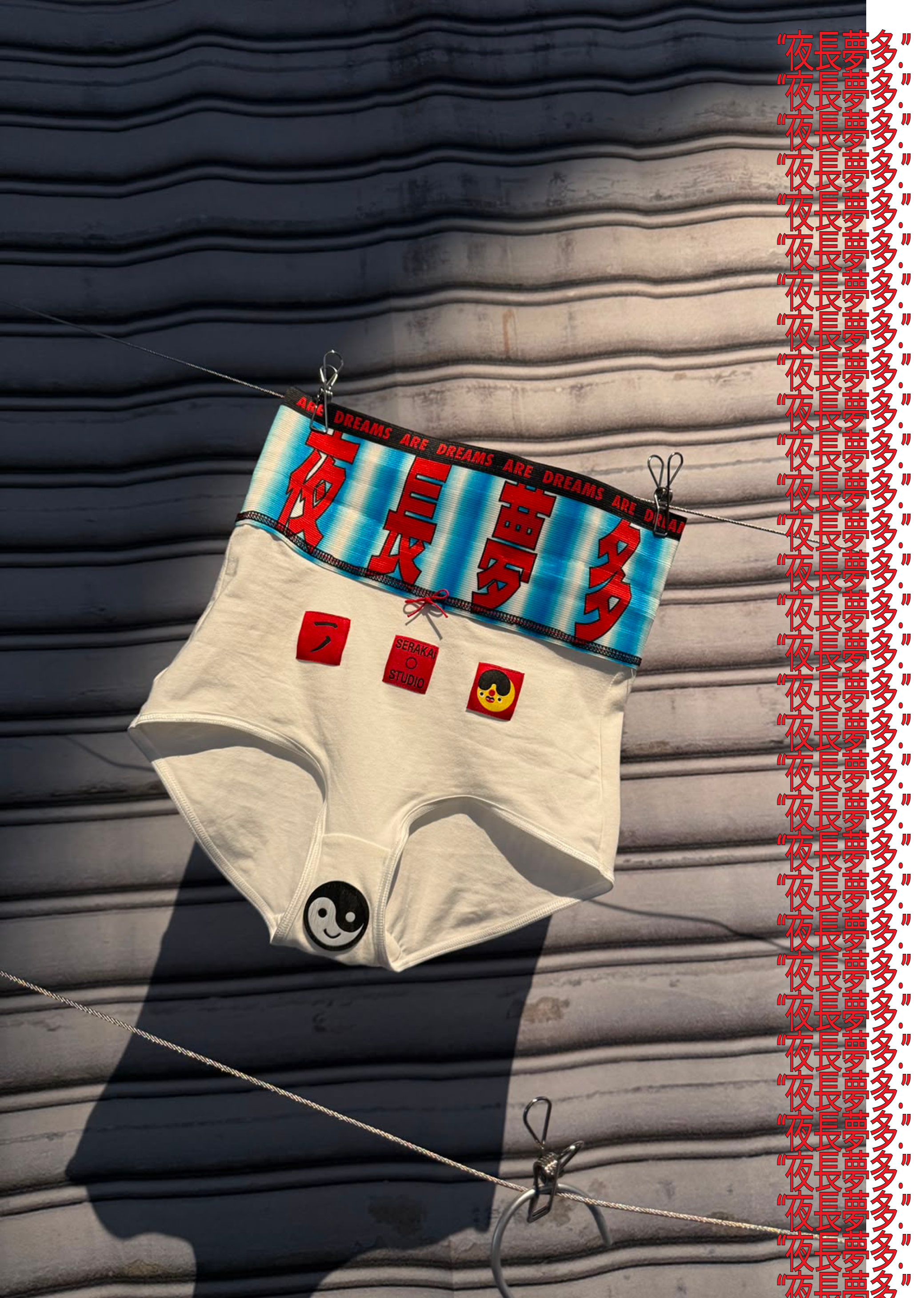
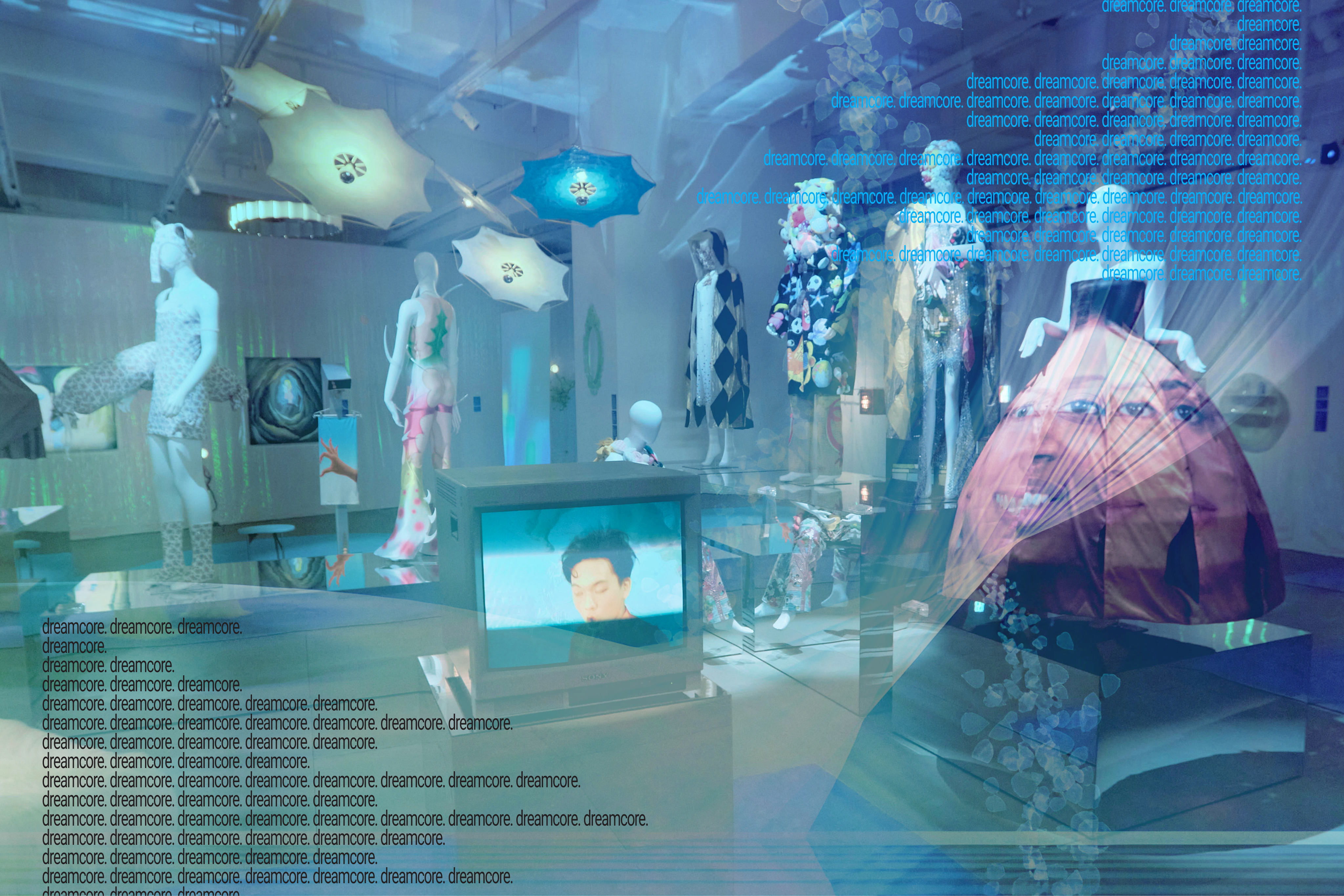
As with Backrooms, icons from a childhood in the 2000s return “as hazy afterimages of an uncanny world, shaped as much by platform circulation and algorithmic repetition as by lived memory itself.” One installation at the exhibit features a Sony CRT TV playing a music video of three Chinese men singing “Ppo-Ppo (Kiss),” a viral North Korean kids song that praises Kim Jong-Un as a generous father bringing prosperity to his nation. 啾 Jiū society, the group behind the installation, repurposes the track as second-generation migrants to China’s Special Economic Zones, paying thanks to their parents who moved to cities like Shenzhen and Xiamen right at the precipice of the nation’s manufacturing goldrush. Elsewhere in the exhibit is baby-diaper-sized underwear from Hong Kong label Yat Pit. A subversion of the high-waisted underwear advertising by Calvin Klein—ubiquitous in the 2000s—the underwear’s waistband is nearly quintupled, colored in neon light blue with the words “夜長夢多” (“long nights and many dreams”) emblazoned in bold red.
As journalist Fred Gao wrote of the dreamcore aesthetic in Inside China, remixing cultural symbols from the turn of the millennium is “re-sanctification”: shrouding these objects in “an aura that is eerie, nostalgic, and tender all at once.” And at the “emotional core” of this aesthetic phenomenon, Gao continues, “lies a sense of relative loss: the modern world we inhabit is not the technological, romantic utopia we were once promised.”
“I was born in Guangyuan in Sichuan province, then moved to Chengdu when I was ten years old, when Beijing won the chance to host the Olympics,” Shirley, curator of “dreamedcore,” agrees. “I remember everyone was so proud about that era that [China] was actually achieving things. Every month there was some exciting news.”
Chinese dreamcore first began as an internet trend, when grainy VHS footage and pictures of internet cafes and the early evolution of China’s Tier 1 cities flooded platforms like Bilibili and RedNote. But much like how Backrooms elevates internet creepypastas into A24 films, Chinese dreamcore is following a similar trajectory of institutionalization. Shirley says the internet trend became a generational experience first, shaped the styles of Chinese creatives second, and later, became institutionalized in exhibits like GOLD’s.
“We miss that era [of national growth],” says Shirley, “but for now, there should be a way that we can take care of all the lostness for the time being.” And as Gao argues, slower national and international growth is transforming dreamcore into “a materialization of discontent with intergenerational economic inequality” where “everything beautiful about the past existed precisely because it was a time of economic ascent.”
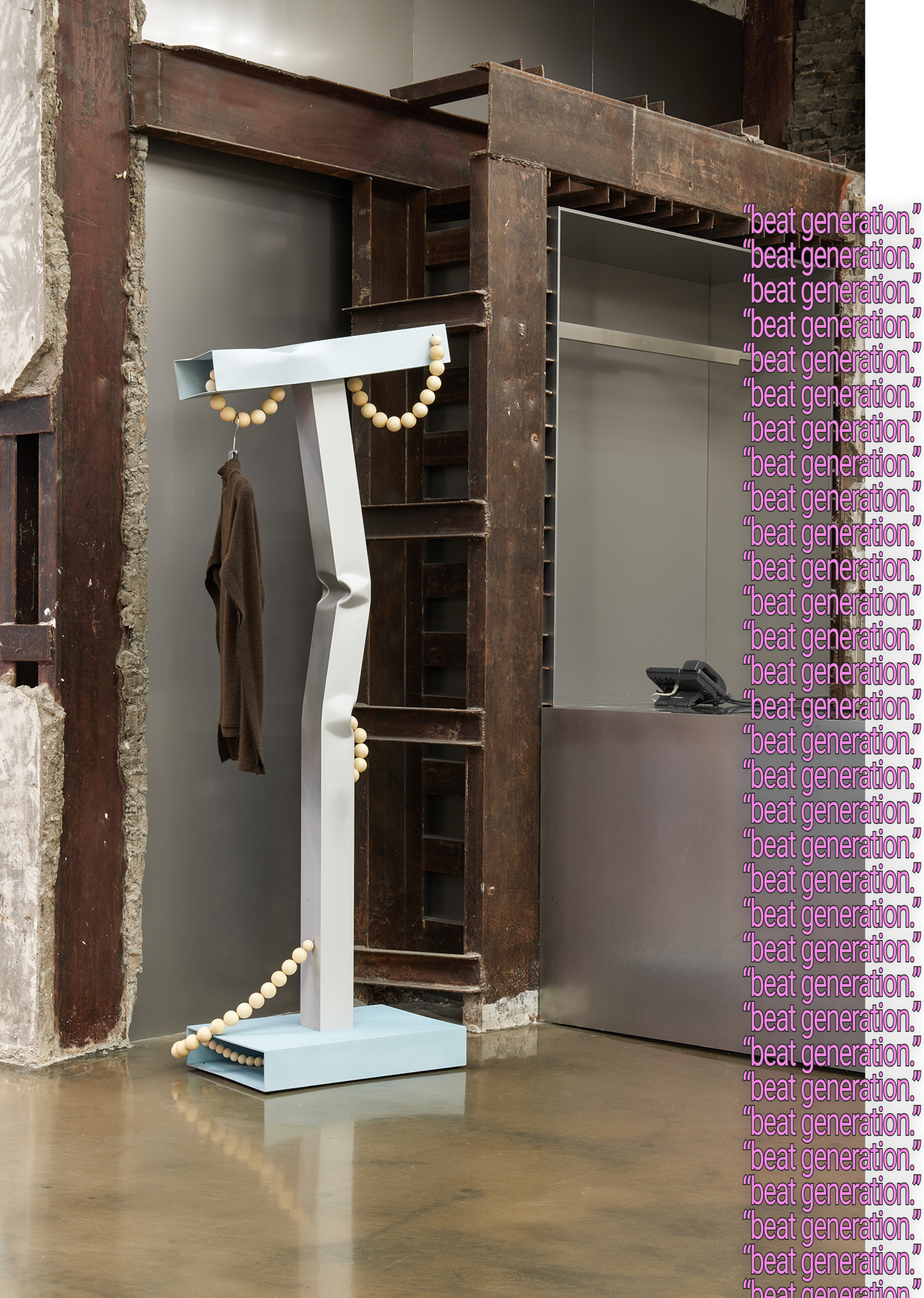
That much is made clear in other pieces in GOLD’s “dreamedcore”: a beat-up hall stand by Xiamen design studio envy envy, representing millennials’ generational economic struggles and signifying, in Shirley’s words, that “our generation takes beats but never breaks”; or a video installation by Ming Wong, who travels between Hong Kong and American Chinatowns, gender-bending, slipping in and out of costume as both a detective from a Wong Kar-wai film and a femme fatale, mimicking a lost generation’s search for identity.
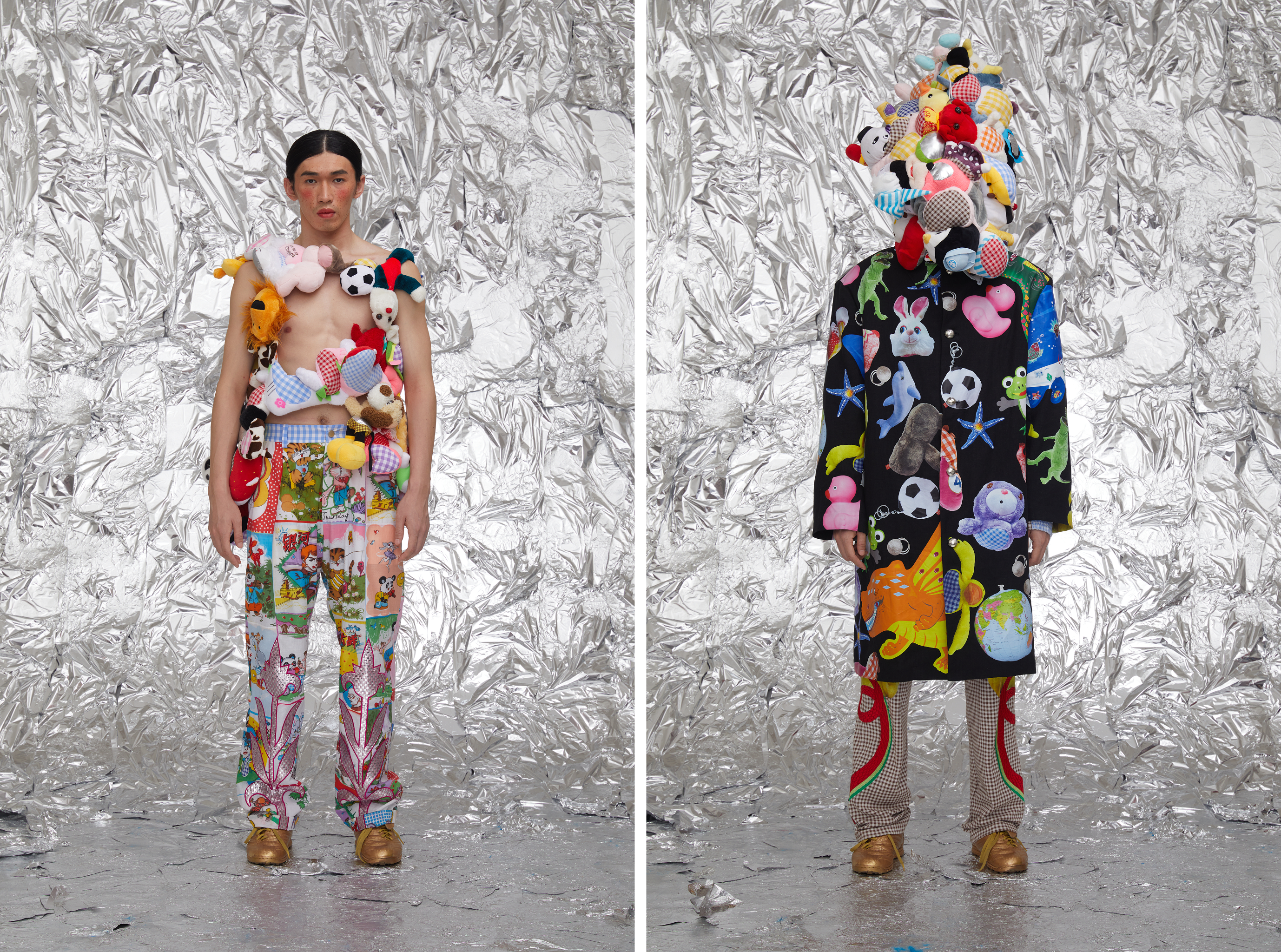
One underlying tension behind this aesthetic, of course, is in longing for the past—both A24’s Backrooms and GOLD’s “dreamedcore” pull from previous decades. But dreamcore is adamant that its gaze is more forward-looking than its less creative cousin, nostalgia-core: “We’re not doing a cultural revival here,” says Shirley. “It’s more that we cherish what we have in the past. But that doesn’t mean we wanna stay there forever.” For example, dreamcore leans heavily on distortion: the world of Backrooms is filled with rooms with deformed layouts and disfigured humans, while GOLD’s “dreamedcore” features works by Peng Ke, whose stained glass pieces connect fragmented memories of childhood—classrooms, neighborhoods, printing on snacks—woven together with cast iron “like thread.” Alternatively, pieces by LVMH Prize-winning studio Penultimate deploy “assemblage techniques from the wearable art movement of the 1970s”: in “Chinese Toy Story,” children’s stuffed toys are cut apart, stitched together, forming what looks like a disturbingly child-like remake of a slutty rave harness and a headpiece with the face entirely obscured.
Fragmented, distorted, a “world of monsters”—not all that different from what Shirley means when she says, “We’re losing our way of controlling our own lives and the lives of people around us,” where many changes are happening “but there’s not much we can do.”
Across time zones, mediums, and geographies—from white nationalists to Indigenous futurists, from Backrooms as a “first” in the canon of Gen Z horror filmmaking to Chinese netizens recalling the 2000s for a new aesthetic—more than a few are distorting the past to imagine the future. “The old world is dying, and the new world struggles to be born.” How else do we navigate the “now,” the “time of monsters”?
Actually, that original Gramsci quote is a mistranslation. As Philip Oltermann traces in The Guardian, in the most widely used English version of the Prison Notebooks, the Marxist philosopher writes instead, “In this interregnum a great variety of morbid symptoms appear.” No, it’s not all that different in meaning from the quippy, Davos-speech-worthy, viral alternative. But much like dreamcore, true history is conveniently remixed as a salve for contemporary anxieties. Distorting the past becomes a means of charting the future.

The Gramsci mistranslation reveal at the end is the best part, the most widely quoted line about our current moment is itself a dreamcore artifact. Distorting the past to make it more useful than the truth. The piece proves its own thesis.